Sustainable and eco-friendly bags: what the claims mean

Sustainable bags should be judged by specific evidence: materials, construction, repair options, expected use and credible environmental claims. No single fabric guarantees a low-impact choice. Start with a bag you will use repeatedly, then verify the exact claim behind any “eco-friendly” label.
What makes a bag more sustainable?
A bag’s sustainability is not established by a color, a material name or a leaf symbol. It depends on where the inputs come from and how the bag is made. Lifespan, repairability and what happens afterward also matter.
Those factors can pull in different directions. A sturdy but resource-intensive bag might be used for years, while a light bag may need replacement much sooner. Neither claim should be assumed without data.
| Factor | What to ask | Evidence to seek |
|---|---|---|
| Material input | Is any content recycled or certified? | Percentage and scope |
| Construction | Can seams and straps withstand intended use? | Specifications and repair access |
| Care | Can it be cleaned without damaging coatings? | Maker care instructions |
| Lifespan | Will its design suit repeated use? | Construction details and warranty terms |
| Repair | Can damaged hardware or handles be replaced? | Written service policy |
| End of life | Is a local recovery route available? | Program criteria and local acceptance |
No material is always greener. A full comparison runs from raw material to disposal, and most product pages do not show it. Keeping a bag you already own in use avoids buying a new one, so start there.
Types of bag and where the sustainability lever sits
Durability matters for every bag, but the part that decides how long it lasts differs by type. Use the table to decide what to check first for the bag you are buying.
| Type | Usual materials | Biggest lever |
|---|---|---|
| Everyday backpack | Nylon or polyester, recycled or not | Durability and repairable hardware |
| Tote | Cotton canvas, recycled polyester | Number of uses before it fails |
| Handbag | Leather, coated canvas, synthetics | Repair service and finish care |
| Luggage | Polycarbonate, ballistic nylon, aluminum | Warranty and spare-part availability |
| Reusable shopping bag | Polypropylene, cotton | Wash care and lifespan |
Read environmental labels without being misled
A claim can be true on its own and still mislead. The FTC Green Guides say marketers should clearly qualify broad environmental statements. They also describe distinctions among recyclable, recycled-content, renewable and degradable claims.
| Label on a bag | What it might establish | What it does not automatically prove |
|---|---|---|
| “Made with recycled polyester” | Some polyester feedstock is recycled | Entire bag is recycled or lowest impact |
| “Recyclable” | A recycling route exists somewhere | That your local program takes it; the FTC says the claim needs qualifying unless facilities reach at least 60% of consumers |
| “Plant-based” | A feedstock originates from plants | Fully biodegradable or plastic-free |
| “Vegan leather” | Not presented as animal leather | Fossil-free, compostable or long-lived |
| “Organic cotton” | Specified fiber-production claim | Zero environmental impact |
| “Eco-friendly” | Usually too broad by itself | A verified overall environmental benefit |
Find out whether the statement covers the exterior fabric, lining, hardware or entire bag. If a tag lists “50% recycled content,” ask what the denominator is. An exterior shell percentage should not silently be treated as a whole-product percentage.
For practical questions about recycled and renewable claims, see the FTC’s consumer advice.
Recycled polyester, nylon and cotton: useful distinctions
Recycled synthetic fabric can replace some virgin input, but its presence alone does not tell you everything about the bag’s production or disposal. Look for specific percentages and the claimed material.
Some bags combine a recycled shell with conventional foam, zippers, linings and coatings. This mixed construction may be appropriate for performance but can complicate future material separation.
A recycled-content statement should not be read as a prediction of durability. Two bags with similar outer fabric may behave differently because of stitching, reinforcement and load distribution.
A useful product listing identifies the fabric, the recycled percentage and ideally the standard used to verify it. If it merely says “made from bottles” without indicating how much material is included, treat the claim as incomplete. Do not infer a specific number of bottles, waste savings or emissions reduction unless a robust source supports the calculation for that exact product.
What do GRS and RCS actually verify?
The Global Recycled Standard and Recycled Claim Standard are Textile Exchange schemes related to recycled inputs and supply-chain verification. GRS includes additional social, environmental and chemical requirements, while both involve tracking material through the supply chain. A logo shows the product met defined criteria; it is not a verdict on which bag is best for the planet.
Textile Exchange’s standards FAQ sets a 20% recycled-input threshold for GRS certification and a 50% threshold for consumer-facing labels. RCS applies to products with at least 5% recycled material.
Do not assume a certified supplier means that every item sold by a brand carries a certified-product claim. The chain of custody and labeling approval matter.
Standards also change: Textile Exchange's new Materials Matter Standard takes effect December 31, 2026, per its transition guidance. It becomes mandatory from December 31, 2027 (checked November 19, 2026). Eligible GRS or RCS sites may choose the new audits during 2027, so confirm what a logo means on the standard owner's site.
When comparing two bags, record the exact claimed content and certification scope. A logo without enough identifying context is a reason to look further, not an answer to every environmental question.
Material types: what a claim can and cannot prove
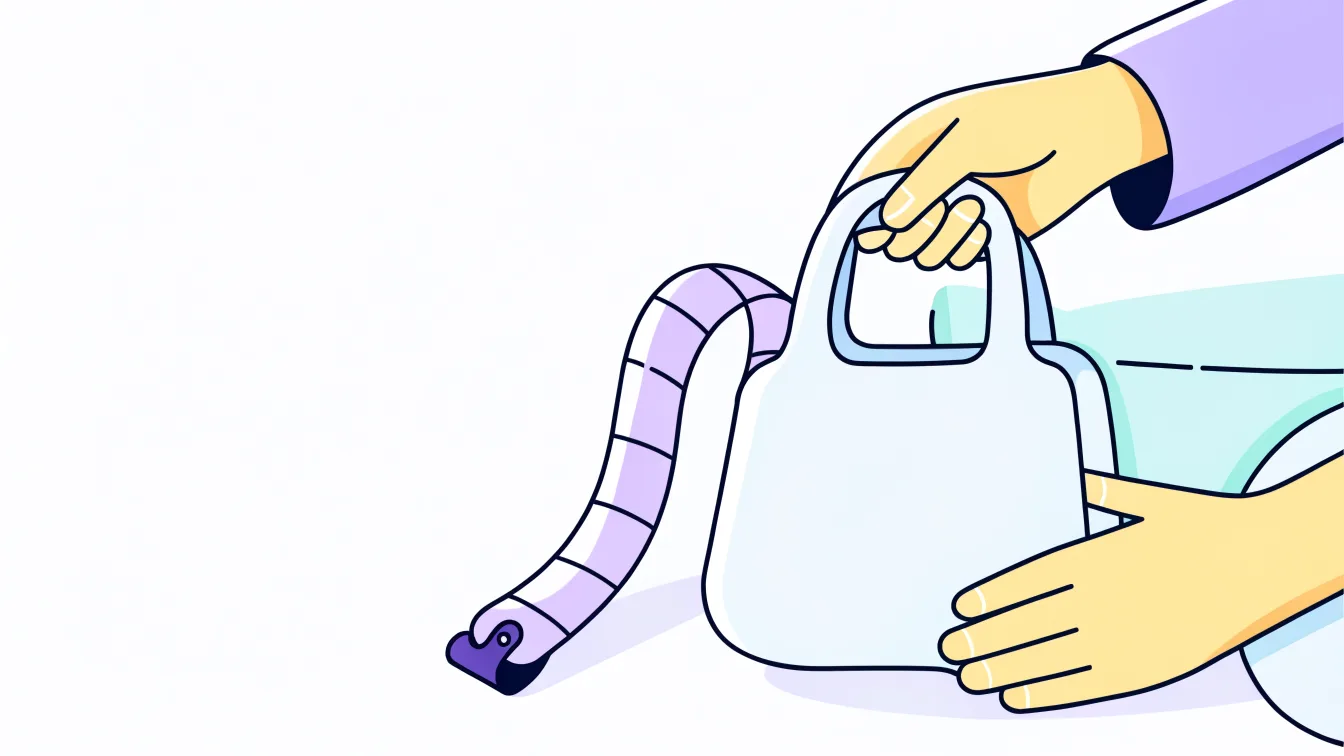
A material claim covers one part of the bag. Find which part, what is claimed and what backs it before judging the whole bag.
| Material type or claim | What the stated evidence can establish | What it cannot establish alone |
|---|---|---|
| Recycled cotton | The specified recovered cotton content when supported by the claim's verification | That coatings, sewing thread and hardware share the same origin |
| Cotton described as natural | Fiber identity; Textile Exchange identifies cotton as a natural fiber | Organic production, low water use or a finished product's disposal route |
| Hemp fabric | The named plant fiber; Textile Exchange describes hemp and its processing considerations | A universal advantage over every other material |
| Plant-containing coated composite | The disclosed substrate and coating composition, as in one maker's example | Plastic-free construction or complete biodegradability |
Use the table to ask questions, not to pick a winner. Compare like with like: shell content with shell content. If one listing covers only the lining, ask for the shell figure before comparing percentages.
Plant-based materials and natural fibers
Cotton and hemp are plant fibers, and Textile Exchange notes that hemp production and processing can be water- and energy-intensive. Ask how the finished textile is constructed and what has been added to it.
A natural-fiber shell is only one part of the bag, so ask about the lining, coating and hardware too. For a cotton tote, check whether an organic claim applies to the fiber and how the seller supports it. For a hemp bag, ask about blends and finishing.
Read a plant-containing composite in layers
One maker states that its base contains 80% pineapple-leaf fiber and 20% PLA. The same page identifies a polyurethane coating for specified versions.
That base percentage is not the finished material's complete composition. The maker also states that the finished material is not wholly biodegradable.
This example shows why “made with plant fibers” needs further detail. Request the exact version's specification, including its backing and coating, before comparing it with another composite. Ask the bag seller which version's specification applies to the item being sold.
Ask useful questions about natural-material claims
Match the evidence to the claim: sourcing claims need sourcing evidence, disposal claims need disposal instructions. The FTC warns that unqualified renewable-material claims may imply that a product is recyclable. A clear explanation should identify the material and the basis for calling it renewable.
Leather and alternatives need careful comparisons
Leather, synthetic leather and plant-containing composites have different construction, care and durability characteristics. They also have different production systems and environmental trade-offs.
“Vegan” usually means no animal leather. It does not mean biodegradable, fully plant-based or lower impact.
For leather supply chains, the Leather Working Group’s claims guidance explains that certification is facility-based. A brand’s membership does not automatically certify each handbag.
Ask which facilities and materials are covered. For plant-based alternatives, read the full composition, including any coating or backing.
Durability should be assessed through construction, intended use and maker care terms. Some coatings can peel, while leather can be affected by moisture and inappropriate cleaners.
Neither material comes with a guaranteed lifespan. For the full comparison, see real leather vs vegan leather handbags.
Repairability and repeated use can be more important than slogans
A bag that can be repaired survives a broken zipper or torn handle. Ask whether the maker offers replacement parts, an authorized repair service or a clear warranty process. Find out which parts are covered and whether ordinary wear is excluded.
A serviceable design often includes accessible stitching, replaceable hardware and materials the maker is willing to maintain. This does not mean every damaged bag can be repaired economically. Very thin bonded coatings or heavily glued layers may be difficult to restore, while structural leather repairs may require specialist work.
Care in brief
Use the bag within its published load and care guidance. Let damp fabric dry before storage, and avoid overfilling so the zipper and strap anchors are not under constant strain. The longer one bag stays in use, the fewer replacements you buy, and that is the saving you can actually count.
A practical checklist for choosing sustainable bags
Before shopping for sustainable bags, identify the purpose: everyday carry, grocery runs, work or travel. If you do need one, compare candidates on a consistent set of criteria.
- Choose the size and shape needed for the actual load.
- Check material details and any specific recycled-content percentage.
- Verify certifications on the standard owner’s website, including their scope.
- Inspect reinforcement, zipper accessibility and handle construction.
- Read the repair, care and warranty terms.
- Consider whether it can be cleaned and maintained for years of use.
- Ask how the product will be handled at end of life in your area.
Price proves little either way: a costly bag is not inherently more sustainable, and a cheaper bag is not automatically short-lived. The FTC guidance is useful whenever a product makes sweeping environmental statements without enough detail.
For how materials behave in use, see bag materials; for warranty wording, see bag warranties explained.

FAQ
Are sustainable bags always made from recycled materials?
No. Recycled content is one possible attribute, but the bag’s usefulness, construction, care, repair options and other impacts matter too.
A recycled-material claim should specify the percentage and component, with reliable support. A bag should not be labeled environmentally superior solely because part of its fabric is recycled.
Is vegan leather better for the environment?
Not necessarily. Vegan leather may be a synthetic polymer or a plant-containing composite with a polymer coating.
The complete composition and production evidence matter. Avoid equating “animal-free” with “plastic-free,” biodegradable or lower impact without product-specific evidence.
Does a GRS label mean a bag is 100% recycled?
No: the Textile Exchange FAQ sets a 20% recycled-input threshold for GRS certification and 50% for a consumer-facing label. So a labeled bag can still be half non-recycled material. Look for the exact certified percentage and which part of the bag it covers.
Can a leather bag be called sustainable?
Only for the specific things the seller can show. Leather Working Group certification applies to the facility that made the leather, not to each product. Judge repairability, construction and care separately from sourcing claims, and ask which facility and material a claim covers.
What is the easiest way to avoid greenwashing when buying bags?
Ask what the label means, which part of the product it covers, and who verified it. Look for actual percentages, scope and current standards rather than vague imagery or slogans. The FTC consumer guide explains how to interpret common claims.
Related guides
Guides in this section
11 guides sit under this page.
Comparisons

Guides

Bag certifications explained: bluesign, GRS, LWG and Fair Trade

Biodegradable and compostable bags
Buying fewer, better bags: a minimalist approach

Do recycled-material bags last?

How many times do you need to reuse a tote bag?

How to check a bag brand's labor practices

Leather and the environment

Plastic bag bans: where they apply and what replaces them
Recycled fabrics: rPET and recycled nylon
Repair or replace: when a bag is worth fixing
Sources
- ftc.gov/business-guidance/resources/environmental-claims-summary-green-guides
- consumer.ftc.gov/articles/eco-friendly-and-green-marketing-claims
- textileexchange.org/recycled-claim-global-recycled-standard
- hub.textileexchange.org/home/site-wide-content/standards-faqs
- leatherworkinggroup.com/what-we-do/claims-guidance
- textileexchange.org/faq/when-will-the-materials-matter-standard-go-into-effect-and-what…
- textileexchange.org/cotton
- textileexchange.org/hemp
- ananas-anam.com/faqs