Real leather vs vegan leather handbags

Real leather vs vegan leather handbags: choose real leather for a hide that ages, can be conditioned and is often repairable. Choose vegan leather if avoiding animal leather matters most. Neither label promises longer life or a lower environmental impact; coating, construction and care decide that.
Real leather vs vegan leather handbags: the practical comparison
| Attribute | Real leather | Vegan leather |
|---|---|---|
| Main material | Animal hide | Usually coated fabric or a non-animal composite |
| Surface feel | Depends on hide, finish, and grain | Depends on coating and textile backing |
| Appearance with use | Can crease, darken, scuff, or patinate | May scuff, crack, peel, or hold its finish, depending on formulation |
| Cleaning | Often needs finish-specific care | Often wipe-clean, but maker instructions vary |
| Repair options | Some scuffs, seams, and components may be repairable | Some seams and hardware repairable; damaged coating can be difficult |
| Water response | Depends on finish; many are not waterproof | Depends on coating and seams; not automatically waterproof |
| Animal-derived content | Yes | Not intended to use animal leather; verify other components |
| Environmental claims | Only with product-specific evidence | Only with product-specific evidence |
Two bags with the same material label can behave differently because of thickness, coating, lining, hardware and stitching.
Choose real leather if you value its particular feel and aging
Leather handbags can develop changes in color, softness, wrinkles, and surface markings. Some shoppers like this developing character; others prefer a finish that looks consistent.
A smooth coated leather and an unfinished natural leather may require very different care. The label alone will not tell you how the surface responds to moisture or scratching.
Look for the exact leather type and finish on the product page. Full-grain, top-grain, suede, nubuck, split leather and heavily coated leather are not interchangeable; the full-grain vs top-grain vs genuine leather comparison explains the grades. Nor does the phrase “genuine leather” on its own tell you which of these you are getting.
Check the maker's material description and examine edge finishing, handle attachment, lining, and stress points. A large handbag with weak attachments remains a risky purchase regardless of its hide.
Repair can be a reason to choose a particular leather bag, especially when the maker provides service options. A professional may sometimes address surface damage, restore edge paint, repair seams, or replace hardware.
But not every damaged leather panel can be returned to its original appearance. Ask what the brand will repair and whether replacement parts are available.
Choose real leather when: you value its appearance and feel, accept routine care, and have verified an appropriate repair path. Skip it when: animal-derived leather conflicts with your preferences or the required maintenance is unwelcome.
Choose vegan leather if animal-derived leather is a deal-breaker
Vegan leather is not one uniform material. Many handbags use a polyurethane-coated textile; other products may incorporate plant-based components or recycled synthetics.
A plant-based headline does not mean the entire bag is made from plants. Coatings, backing fabrics, adhesives, straps, and linings can contain additional materials.
For daily use, start with a maker's precise composition and care instructions. A smooth synthetic finish may be easy to wipe, but heat, abrasion, bending, and certain cleaning chemicals can affect coatings.
If the coating begins to separate from its backing, a home cleaning routine will not reverse that damage. Replacing the bag's handle or zipper can still be possible, depending on construction.
Vegan means no animal-derived inputs. It says nothing about recyclability, biodegradability or carbon impact. A maker that lists the coating, base textile and trim separately is telling you more than one that prints a single green word on the hangtag.
Choose vegan leather when: avoiding animal leather is a priority and the manufacturer gives meaningful composition and care information. Skip a specific bag when: material disclosures are vague, its coating is unsuitable for your intended use, or repairs appear impossible.
Durability depends on more than the surface
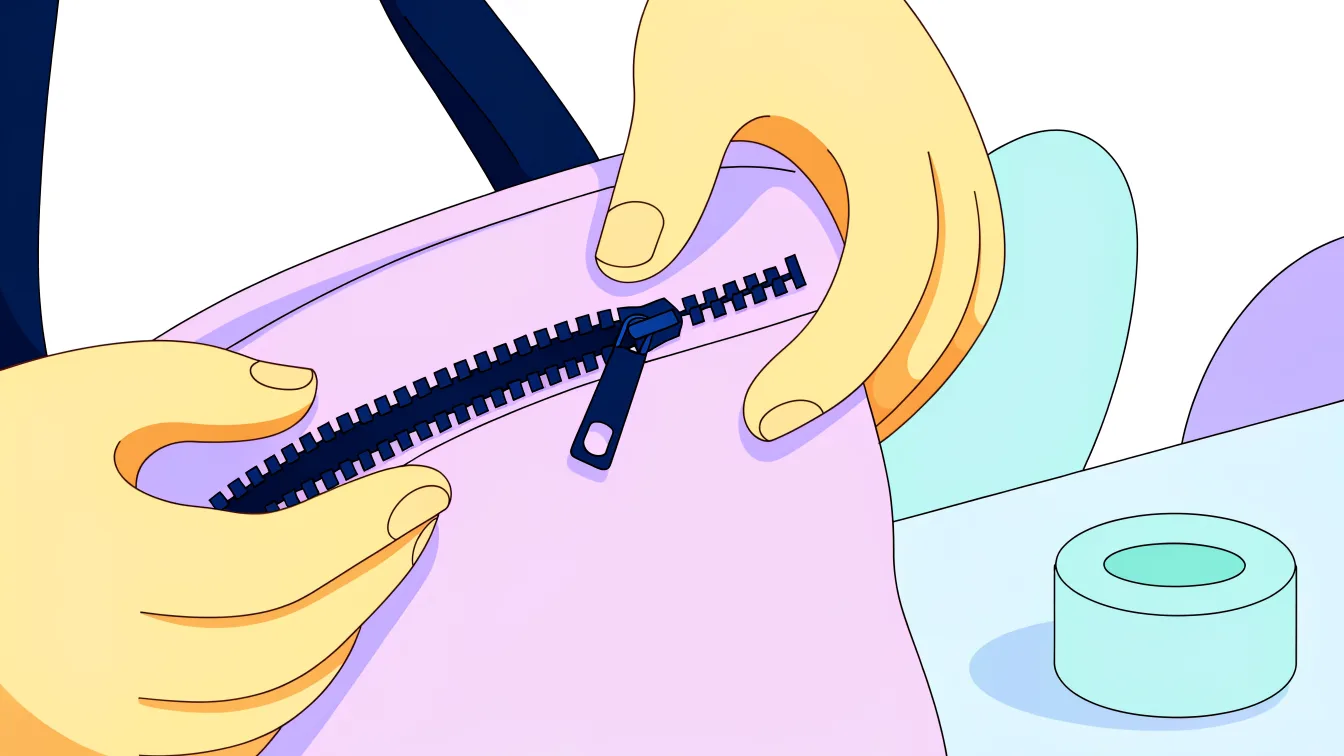
A handbag fails in several ways. The corners may abrade, a seam may tear, a handle anchor may loosen, or the zipper may stop working. Some failures have little to do with whether the exterior is leather or synthetic.
If you carry a heavy laptop, concentrate on handle attachment, reinforcement, and bag geometry. A beautifully finished material cannot make up for a weak load-bearing seam.
Look closely at repeated bend points. Handles, corners, opening edges, and flap hinges flex every day. Ask whether the maker supplies a warranty against manufacturing defects and whether wear is excluded.
Do not assume a lifetime warranty means indefinite coverage of surface aging. Compare policies in writing.
A soft organizer insert keeps keys and pens from scratching the lining, but a rigid one can press hard against the sides. Match the insert to the bag's interior.
Cleaning and storage: care by finish
| Issue | Real leather approach | Vegan-leather approach |
|---|---|---|
| Light surface dust | Soft dry cloth, subject to care label | Soft dry cloth, subject to care label |
| Spot cleaning | Use finish-specific maker guidance | Check allowable mild cleaner and coating instructions |
| Rain exposure | Blot and air-dry as directed | Dry surfaces and seams; avoid assuming full waterproofing |
| Conditioning | Only if appropriate for that leather finish | Do not use leather conditioner unless maker directs |
| Storage | Avoid crushing; use appropriate stuffing | Avoid sharp folds and excessive heat; support shape |
Never reach for solvent, bleach or heavy oils because a video said so. The wrong cleaner can discolor a finish or lift a coating.
Test approved products in an inconspicuous spot only if permitted by the bag's care instructions. For valuable pieces, consult a professional experienced with that specific material.
What about sustainability?
Neither “natural” nor “vegan” answers the environmental question by itself. Leather production involves animal agriculture and tanning; synthetic coatings involve their own raw materials and manufacturing.
A composite with plant content can still contain polymers. The relevant impacts depend on the actual supply chain and manufacturing process, not a single adjective on the hangtag.
The FTC's Green Guides summary advises marketers not to make broad, unqualified environmental claims and to qualify general claims with specific environmental benefits. Apply that principle to handbag advertising. Ask for the material percentages, stated certifications, scope of any lifecycle study, and which parts of the product the claims cover.
A bag you keep for years beats one you replace every season, but neither material category can claim that by name. Lifetime comes down to construction, how you load it, how you care for it and whether it can be repaired.
When it does not matter much
For an occasional evening bag used gently, the real leather vs vegan leather handbags question may matter less than opening size, strap comfort, closure, and style. A bag carried twice each month experiences different demands from a daily commuting tote. You may also find excellent fabric handbags that avoid the leather decision altogether.
If two options meet your aesthetic and animal-material preferences, compare measurable details: usable inside dimensions, empty weight, strap drop, liner, fastening method, return terms, and repair policy. Do not pay extra for an undefined sustainability label or a romantic claim about how a material will age.

FAQ
Does vegan leather last as long as real leather?
Not as a category. Coating, backing, seam construction and how hard you use the bag decide wear, so compare the two bags in front of you.
Some leather finishes can be serviced; some synthetic coatings are harder to restore after peeling. Compare the exact products and their repair policies.
Is vegan leather always plastic?
No single formulation describes the whole category. Many products use synthetic coatings such as polyurethane, while others include plant-derived materials alongside polymers or textiles. Ask for a composition breakdown, especially when advertising highlights a plant ingredient without explaining the rest of the material.
Is real leather waterproof?
Do not assume so. Leather finish, seams, openings, and construction all affect water behavior.
Some treated surfaces resist light moisture, but that is not the same as a waterproof bag. Follow the maker's care directions and protect contents separately during heavy rain.
Can you repair a peeling vegan leather bag?
Sometimes a specialist can improve a localized area, but damaged coating is not always restorable to an even durable finish. Hardware and seams may still be repairable. Ask the maker or a qualified repair service before applying glue, paint, or solvents yourself.
Is vegan leather better for the environment?
The label alone does not prove that. Materials, manufacturing processes, lifespan, and end-of-life options differ.
Look for specific evidence covering the actual product instead of broad environmental claims. The FTC cautions against vague, unqualified green marketing.