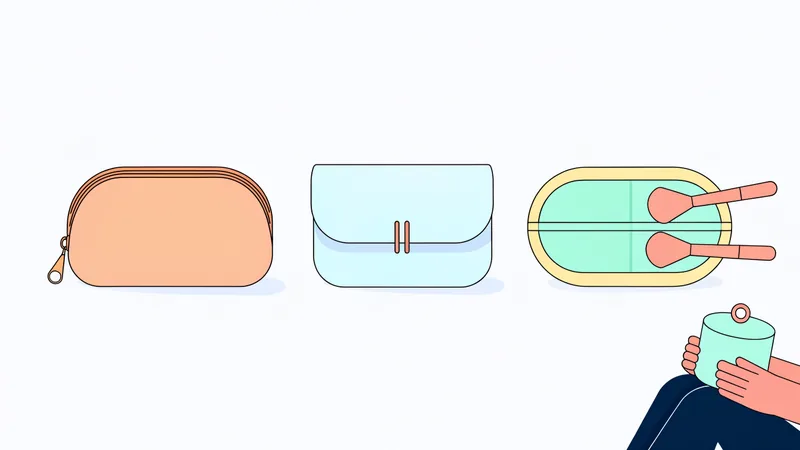
Cosmetic and toiletry bags: types, sizes and how to choose
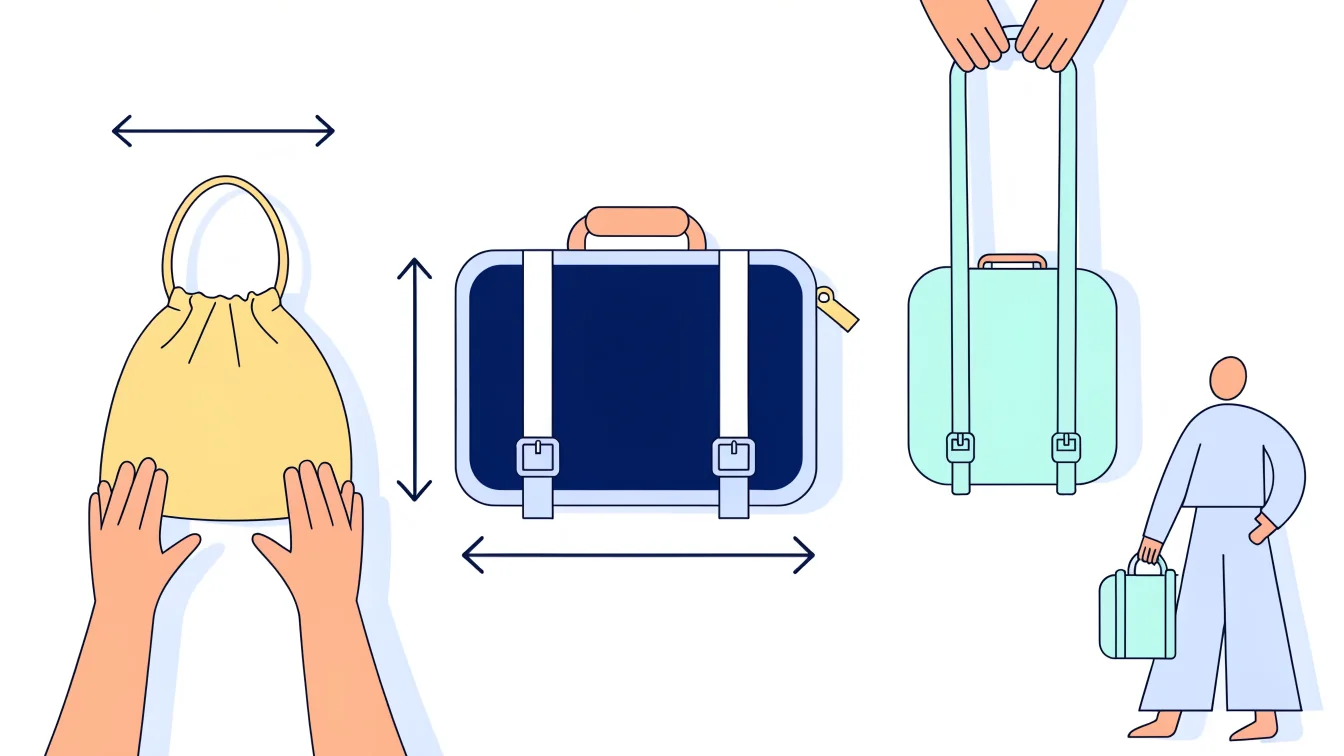
Choose cosmetic bags around your actual bottles, tools and daily routine. A small washable pouch suits essentials, a hanging kit organizes shared bathrooms, and a structured train case protects larger collections. For flights, pack carry-on liquids separately according to the TSA 3-1-1 rule.
What is a cosmetic bag?
The names overlap in shops, but each points to a different job. Knowing which is which makes product pages easier to read.
- Cosmetic bag: a zipped pouch for makeup, brushes and small beauty tools.
- Toiletry bag or dopp kit: a pouch or box for shower and grooming products, such as toothpaste, a razor and shampoo.
- Hanging kit: a toiletry bag with a hook and fold-out pockets, so it can hang from a rail or door.
- Train case: a rigid, boxy case with dividers that keep bottles and palettes upright.
- Vanity case: a train case with a built-in mirror.
A common setup is two bags: a cosmetic bag for daily makeup and a toiletry bag for the bathroom. The sections below cover both.
Which cosmetic bag type fits your routine?
There is no universal “right size” because cosmetics vary from slim pencils to wide jars. Choose the shape first, then check whether your biggest item passes through the opening. A zipped pouch is flexible and easy to pack inside another bag.
A boxy case is better when bottles need to stand. A train case offers structure, often at the expense of bulk. A hanging kit gives separate pockets for sink-side use but can be awkward on a shallow shelf.
| Type | Works best for | Useful feature | Main compromise |
|---|---|---|---|
| Flat pouch | Lip balm, compact and daily touch-ups | Simple broad opening | Small items gather at bottom |
| Boxy pouch | Makeup with a few bottles | Flat base | More volume when empty |
| Structured train case | Brushes, palettes and fragile containers | Shape-holding walls and dividers | Harder to compress into luggage |
| Hanging toiletry kit | Shared bathrooms and multi-stop travel | Separated pockets and hook | Needs somewhere safe to hang |
| Clear travel pouch | Airport organization | Visible contents | Not automatically TSA-compliant |
| Brush roll | Makeup brushes | Individual sleeves | Usually needs a separate liquids pouch |
Do not judge capacity by outside height: a rigid case with thick dividers can hold less than a same-size soft pouch. A soft pouch, in turn, lets a tall bottle press into its neighbors. Lay the exact products on a table before choosing.
Train cases: choose the layout before the shell
Start with the products that need defined positions. Arrange palettes, jars and brushes as you want to find them, then compare that arrangement with the case interior.
Check how the lid opens when the case sits on a counter. Ask whether removable sections can be lifted out without disturbing everything beneath them.
Train cases have no standard layout. Compare each case's listed shell, pouches, pockets and straps.
Decide where the case will ride during the trip. Inside a suitcase, it has to earn its space.
Hanging kits: check both the packed and open arrangement
Picture the kit beside the sink and fully unfolded. Check the hook opening, attachment point and clearance below it before relying on hanging storage.
One maker states that its kit has a hanging hook, removable hygiene pouch and built-in workspace. Its published dimensions distinguish the main storage from the detachable pouch.
Try reaching the items used first without lifting other pockets. Check whether bottles remain secure when the bag changes from packed to hanging orientation.
Do not assume a room will offer a suitable rail. Choose a kit whose counter arrangement also works for your routine.
How big should a cosmetic bag be?
Start with what actually travels. Place every intended item in one group, separate liquids from dry products, and measure the longest brush or tube.
Then group products by use: morning routine, makeup touch-ups and shower items. The right bag leaves the most-used items visible rather than requiring a complete unpacking each time.
| Kit | Typical contents | First bag style to try |
|---|---|---|
| Minimal daily | Lip product, tweezers, compact | Small flat pouch |
| Day-to-day makeup | Brushes, compact, small palette | Boxy pouch |
| Basic overnight | Small toiletries plus makeup | Medium washable kit |
| Multi-product routine | Multiple bottles, brushes, palettes | Train case or two separate pouches |
Internal organizers also consume room. Leave enough clearance for zipper tracks so a full bag closes without forcing the teeth.
Match trip length to the actual interior
Use trip length to plan quantities, then measure the containers you chose. A longer stay does not automatically require more separate products.
The first two examples use measurements published by one maker. They are individual examples, not universal size classes or guaranteed packing recipes.
| Planning situation | Example format | Published measurements | How to use the example |
|---|---|---|---|
| Overnight with a deliberately minimal kit | Small removable pouch | One maker states 9 × 2.8 × 2.4 inches | Compare the longest tool and combined container width |
| Several nights with separated bathroom items | Hanging kit's main storage | The same maker states 8.5 × 4 × 6 inches | Check the main space separately from the removable pouch |
| Longer stay or a collection needing structure | Train case | Check the maker's listed dimensions | Confirm usable clearance around the lining and internal fittings |
Listed dimensions are usually exterior. For a close fit, ask the maker for the usable interior.
For repeat trips, keep a record of what was actually used. Remove unnecessary products before deciding the next journey needs a larger case.
What to check in materials, lining and construction

The most useful cosmetic-bag feature is often the interior rather than the exterior print. A smooth wipe-clean lining lets you see spilled powder or lotion before it spreads. But “wipe clean” is not the same thing as waterproof.
Look closely at the base, stitch holes and zipper tape. Liquid can escape through these points even when the lining itself is coated.
| Component | What to inspect | Why it matters |
|---|---|---|
| Lining | Smooth, light-colored and easy to reach | Spills are easier to spot and clean |
| Base | Sits flat without collapsing | Bottles are less likely to tip |
| Zipper | Opens wide without catching dividers | Easier access and fewer snags |
| Compartments | Large enough for your actual products | Avoids wasted space |
| Brush pockets | Length and protective flap | Reduces contact with creams and powders |
| Seams | Reinforcement near handles and corners | These areas bear handling stress |
Check the maker’s care instructions before washing. A fabric outer shell may tolerate spot cleaning while an internal board, adhesive or coated lining does not.
If you regularly carry products that leak, put them in an additional sealed container. Do not rely on a cosmetic pouch to contain a spill.
Features to check
Inspect the bag with the contents you intend to pack. Open it in the position you will use at your destination, not only flat on a shop counter.
- Check that the opening admits the widest jar without stretching.
- Confirm that brush sleeves fit the handles and bristles together.
- Try the closure with the intended bottle arrangement.
- Look for accessible corners when checking how you will clean residue.
- Check whether removable inserts can be bought separately if that matters to you.
Compare lining descriptions carefully
A material name identifies part of the construction. Ask what the maker says about the completed seams, closure and permitted cleaning method.
One maker states that its kit uses carbonate-coated fabric and coated mesh internally. Before buying, ask which surfaces can be wiped and with what cleaner. Also ask whether any waterproof claim covers the lining alone or the assembled bag.
A lining description like this does not establish a waterproof rating or a washing method. Choose the lining together with accessible construction and clear care directions.
How to organize makeup and toiletries without wasting space
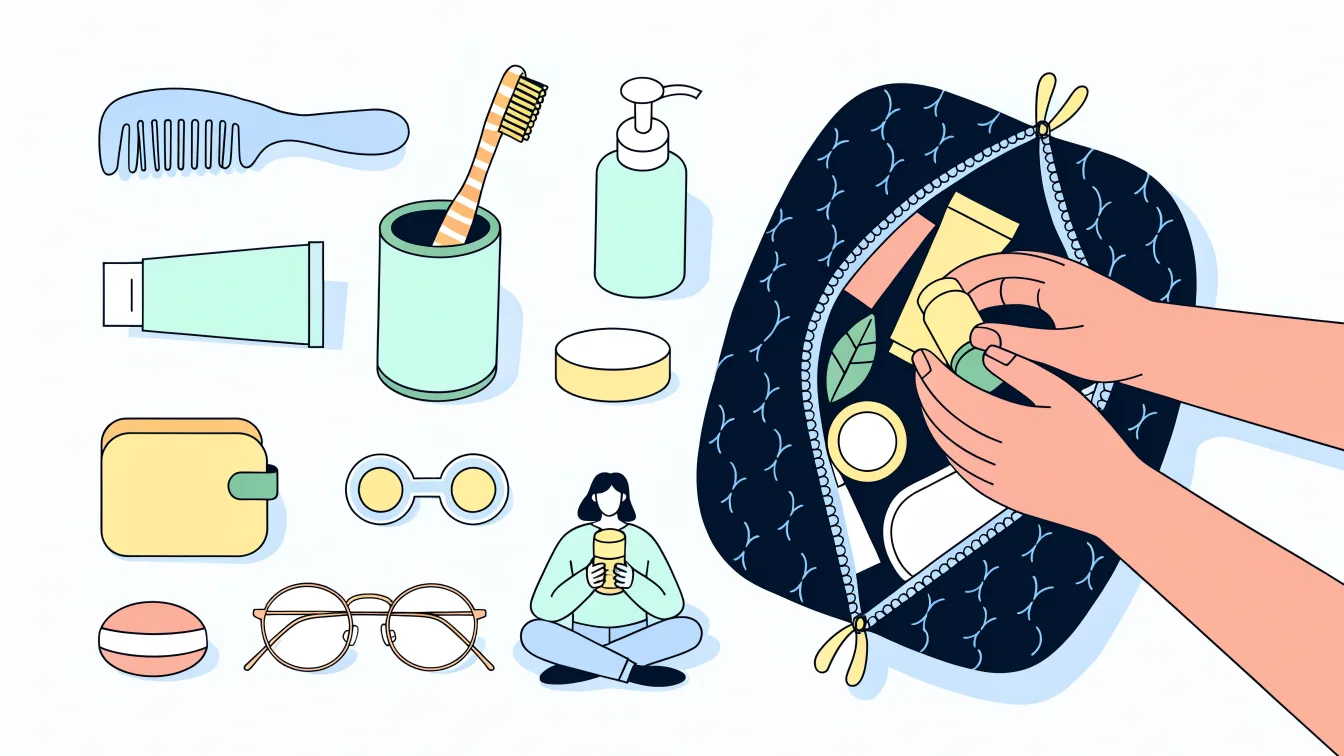
Keep daily essentials in the easiest pocket. Group long, narrow products together and put hard-edged items where they cannot press against glass containers.
Close caps before packing and use a separate sealed bag for anything prone to leakage. Brushes should not sit directly in wet residue from toothpaste or lotions.
An efficient packing routine can be simple:
- Empty the pouch and discard expired or unwanted items according to each product’s label.
- Wipe its interior using the care method approved by the bag maker.
- Choose one main pocket for frequently used products.
- Stand bottles upright if the bag supports that arrangement.
- Slide brushes into sleeves rather than dropping them into the same space as liquids.
- Zip the case and turn it gently. If you hear heavy objects shifting, reorganize before travel.
A permanently full organizer means the bag is too small or the collection too large. Forcing a soft pouch shut strains the zipper and buries what you need.
Airport liquids rules and where a cosmetic bag helps
For travel from U.S. airports, TSA's travel tips say carry-on liquids, gels and aerosols follow the 3-1-1 rule. Each container holds 3.4 ounces or less, and all containers fit in one quart-size clear zip-top bag per passenger, placed in a screening bin. A decorative pouch only counts if it is quart-size, clear and zip-top; if in doubt, use a plain zip-top bag.
Keep the required liquids bag reachable rather than buried under clothes. A separate makeup case can hold dry items and items that are permitted outside the liquids bag.
TSA screening and item decisions may change; check TSA's liquids rule page before departure. This guidance was checked in November 2026.
The limit applies to the container, not the amount left in it. If you rely on medically necessary liquids, check TSA’s current guidance for that category rather than applying a generic makeup rule.
For a traveler who lives out of a suitcase, using two small pouches often beats one huge compartment. Keep the items needed at security or in a plane seat apart from those used after arrival.
How to clean and maintain cosmetic bags
Begin by checking the care label and the maker’s published directions. Remove loose powder with a soft dry cloth or brush. For a washable interior, use only the cleaning solution and moisture level permitted by the maker.
Test an unobtrusive area before treating a stain. Dry the bag open until it is fully dry before replacing your products.
Avoid pouring cleaning liquid straight into a pouch. Dense dividers and padding can retain moisture.
Do not use high heat to accelerate drying, because adhesives and coatings may be heat-sensitive. If a product spills repeatedly, replace the leaking container rather than continually deep-cleaning the bag.
A damaged zip or stained lining does not automatically mean the entire bag needs replacing. Simple removable inserts can sometimes be cleaned or exchanged.
A split seam or broken hardware is a job for a professional repairer. Check the maker's warranty first; a home repair can void it.
Which setup is worth buying?
For everyday use, start with one simple pouch that opens fully and can be cleaned safely. Travelers carrying both makeup and shower products often benefit from two pouches, especially if one needs quick access during screening.
A hanging kit makes sense for repeated hotel stays when countertops are limited. A train case suits a larger or more delicate collection but may be excessive for a carry-on trip.
If you are unsure, shop for cosmetic bags using the largest object as your first constraint and zipper access as your second. Ask whether the bag still works when only half full.
You should not need a large case for three small items, or have to unpack a tiny pouch to reach a toothbrush.
When you are ready to compare named bags, see best makeup and cosmetic bags and best toiletry bags for travel. For the rest of the suitcase, see packing cubes.
FAQ
Can you use a regular cosmetic bag as a TSA liquids bag?
Not automatically. TSA's travel tips call for a clear quart-size plastic zip-top bag for carry-on liquids, with containers of 3.4 ounces or less.
A pretty clear pouch might be larger or have a different closure. Use a compliant liquids bag and keep the rest of your cosmetics organized separately.
What size makeup bag is best for everyday use?
The best everyday makeup bag is just large enough for the items you really carry. Measure your longest brush and widest compact, then check the zipper opening.
If products pile in layers, you may need to empty the bag to find one item. A wider opening or two small compartments will help.
Are makeup bags waterproof?
Do not assume so. A coated interior can make spills easier to wipe, but seams and zippers may still leak.
Look for explicit maker claims about waterproof construction before trusting a bag with loose liquids. Even then, a sealed bottle or leakproof inner pouch is a sensible extra barrier.
Should I choose a hanging toiletry kit or a train case?
A hanging kit suits repeated travel and bathrooms with little counter space. A train case suits more structured storage and collections that need protected sections. Compare how much room each occupies in luggage, and remember that hooks, dividers and rigid walls add bulk.
Can you machine-wash a cosmetic bag?
Only when the care label or maker says to do so. Some pouches have cardboard reinforcement, adhesives or coatings that may not survive machine washing. Empty the bag, follow the specified cleaning instructions and dry it completely before putting cosmetics back inside.
Related guides
Guides in this section
1 guides sit under this page.