Neoprene bags
A neoprene bag uses a synthetic rubber material associated with softness and flexibility; neoprene is also known as chloroprene rubber. Assess the finished construction and care instructions. A foam material's insulating properties do not, by themselves, establish food-holding times or protection for a laptop.
What is inside a neoprene bag material?
Start with the rubber and its surface construction. Yamamoto identifies chloroprene rubber as the material widely known as neoprene. Its rubber guide describes closed-cell structures with flexibility and thermal insulation.
Those are descriptions of the maker's materials, not proof that every bag uses an identical grade. Ask for the composition if the listing relies only on a familiar wetsuit comparison.
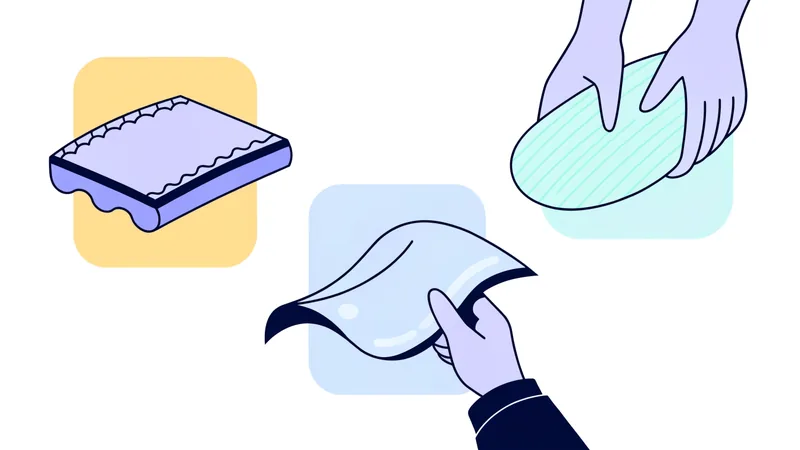
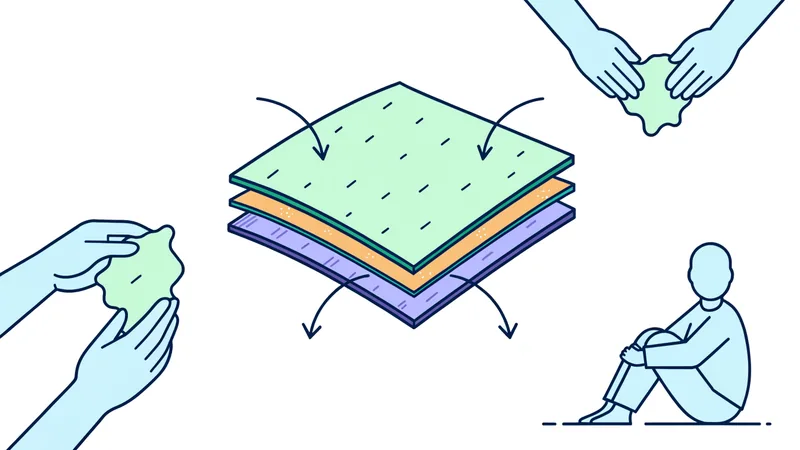
The visible surface can be another layer. The same maker explains that jersey is often laminated onto a sliced foam surface. Read the foam and textile description together.
| Part of the description | What it identifies | What to establish for a bag |
|---|---|---|
| Rubber type | The main polymer family | Actual composition rather than an appearance claim |
| Foam structure | The cellular material | Grade and intended application |
| Textile facing | A surface layer | Fiber composition and approved cleaning |
| Finished construction | Panels, seams and closures | Access, dimensions and protection claims |
Use the bag materials guide to compare foam-based, woven and coated constructions. Keep the material description separate from the complete bag's intended job.
Stretch and softness: useful qualities with practical limits
BUILT's materials page describes its neoprene as soft, flexible and stretchy. Those qualities help explain why the material appears in its lunch-bag range.
Treat flexibility as a characteristic to evaluate, rather than an invitation to overfill a bag. Use the maker's dimensions and capacity statement when deciding whether your belongings fit.
For a tote, plan around the objects you actually carry. Compare the opening with the widest rigid item, and consider whether you want a structured base or a more flexible shape.
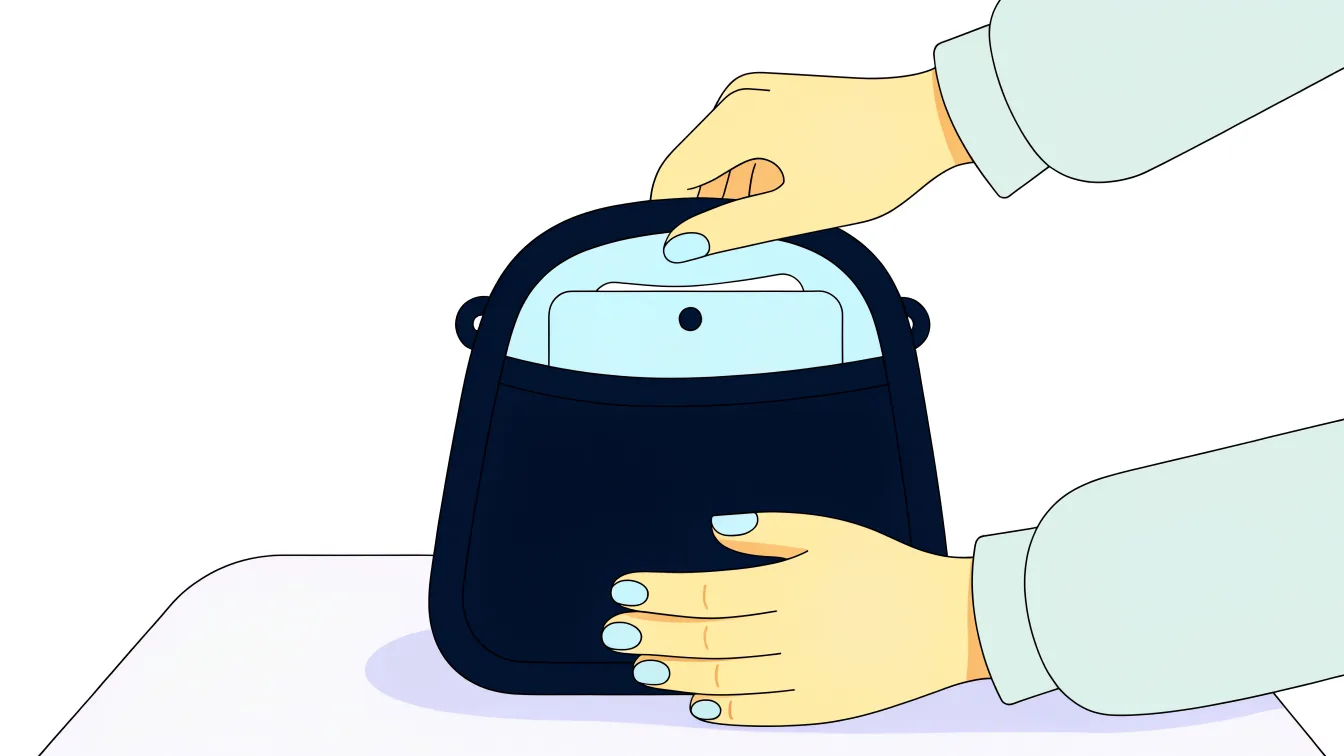
For a sleeve, measure the device itself rather than relying only on its advertised screen size. Request usable internal dimensions and check whether a protective case is included in the fit description.
Do not treat a soft surface as an impact-test result. If drop protection matters, request evidence for the complete sleeve or bag and read the conditions under which it was evaluated.
Also decide whether a flexible exterior matches the organization you need. Compare pockets and dividers as part of the finished design.
For the separate role of cushioning layers, see foam and padding in bags. Material softness and a documented protection claim are different pieces of information.
Insulation: separate material behavior from food safety
Closed-cell rubber can provide thermal insulation. That material property explains a possible use, but it does not supply a safe holding time for every lunch carrier.
For perishable lunches, USDA recommends an insulated carrier with room for at least two cold sources, such as frozen gel packs or water bottles. Place one above the food and one below. Neoprene insulation does not replace these cold sources.
FoodSafety.gov advises keeping a refrigerator at 40°F or below. Its general guidance says perishables should not remain unrefrigerated beyond two hours, or one hour above 90°F.
Do not treat a fabric name or an insulation claim as permission to ignore those limits. Follow official food-safety guidance and the product's instructions when planning storage and transport.
This is general food-handling information, not an assessment of a particular lunch or medical situation. If someone has additional health-related dietary requirements, follow their clinician's advice alongside safe food-handling guidance.
For the carrier itself, consider access to the interior, the closure and any separate liner. Read the lunch-bag cleaning guide for the separate care task, using the maker's instructions as the starting point.
Washing depends on the complete product
Check the care label or maker's care page first. Two bags can share a broad material name while having different approved washing methods.
For example, BUILT lists its Gourmet Getaway neoprene lunch bag as machine washable. Dagne Dover's neoprene care guidance instead specifies hand washing and warns that machine washing may chip hardware.
Those are product-care examples, not recommendations to purchase either item. Their different instructions are the useful point: identify your bag before choosing the method.
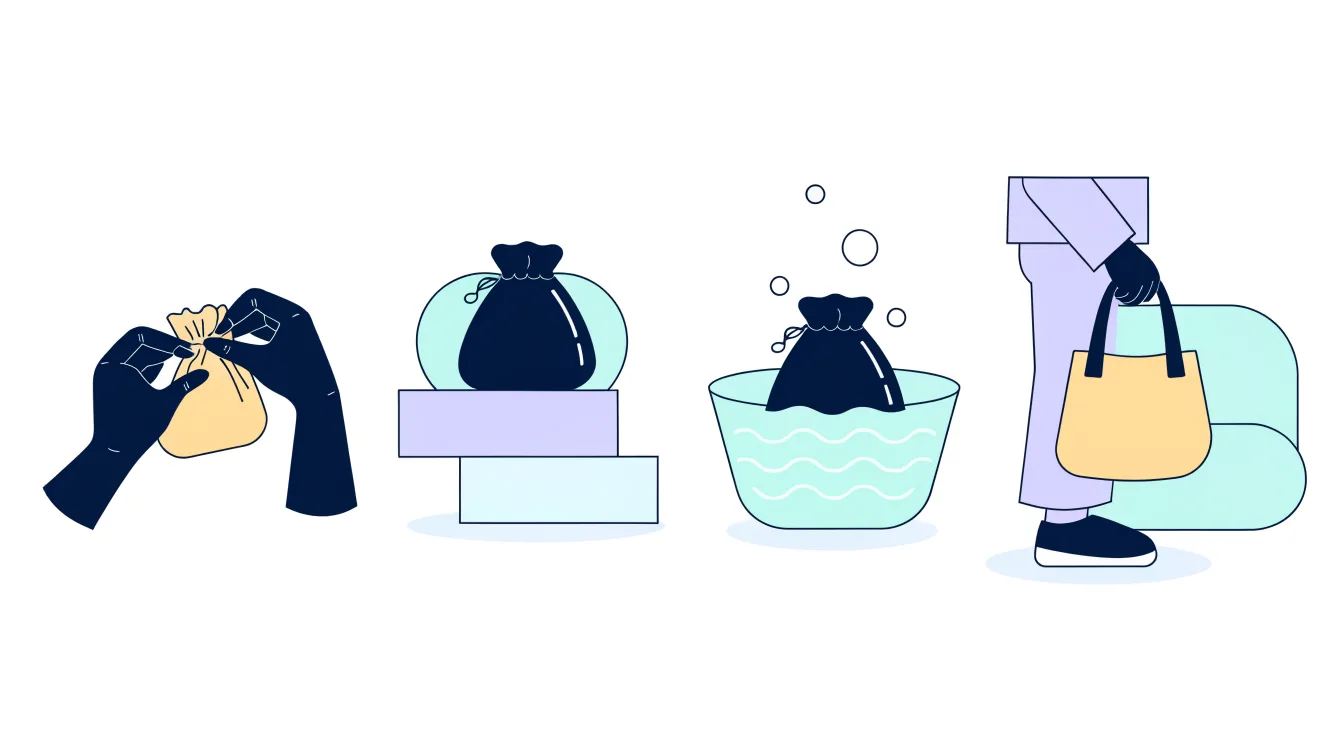
For bags covered by the second guide, the maker describes cold-water hand washing, reshaping while wet and flat drying. It also warns against alcohol, acetone and oil. Do not extend those instructions to an unidentified assembly.
For your own bag, establish the permitted cleaner, water temperature, washing method and drying method. Check instructions for removable bases, straps or inserts separately.
If the label is missing, ask the manufacturer using photographs and a model identifier. Avoid using a wetsuit-cleaning routine simply because the material feels similar.
For a gym carrier, the gym-bag washing guide addresses the task more broadly. The complete product's care instructions remain the deciding reference.
What it means when you shop: match the construction to the role
Choose a neoprene bag by its intended job and complete specification. Read material composition, usable dimensions, closures and care requirements together rather than starting and ending with the outer texture.
For a tote, compare access, organization and the base. For a sleeve, compare device dimensions and the coverage around corners. For a lunch carrier, plan safe food handling as well as capacity.
BUILT's FAQ tells owners to check the product label, packaging or individual product page because washing instructions vary. Keep that care information with the model name for later reference.
A wetsuit-like feel does not identify every component. Stretch does not supply a load rating, and insulation does not establish a safe food-storage period.
Appearance changes also deserve a clear description when shopping secondhand. Dagne Dover notes that creasing and pilling can occur in its neoprene products. Request photographs and distinguish cosmetic changes from known seam or hardware damage.
For the finished assembly, use the bag quality guide. Compare documented features and present condition rather than assigning every foam-based bag the same strengths or limitations.
FAQ
Is neoprene a natural fabric?
The material maker identifies neoprene as chloroprene rubber, rather than a natural woven fiber. A finished material may also have a textile facing. Request the complete composition when comparing bags, especially when the listing describes appearance or feel without identifying the rubber and surface layers.
Can every neoprene bag go in the washing machine?
No general washing rule covers every assembly. BUILT says care instructions vary by product. Read your bag's label and model-specific guidance, including the drying method. Check removable inserts and hardware too, rather than applying instructions from a different neoprene item or a wetsuit.
Does neoprene guarantee that lunch stays safely cold?
No. USDA recommends at least two cold sources in an insulated lunch carrier, with one above and one below perishable food. Neoprene insulation does not replace them or guarantee a safe holding time. Follow federal time and temperature guidance and the carrier's instructions.
Is a soft neoprene sleeve enough protection for a laptop?
Softness alone does not answer a device-protection question. Request usable internal dimensions, closure coverage and any documented impact performance for the complete sleeve. Material-maker guidance describes foam flexibility and insulation; it does not establish the protection level of an unrelated finished laptop carrier.
Sources
- yamamoto-bio.com/material-e/sus2.html
- yamamoto-bio.com/material-e/rubber.html
- yamamoto-bio.com/material-e/cell.html
- builtny.com/pages/our-materials
- builtny.com/pages/faq
- builtny.com/products/gourmet-getaway-lunch-bag
- dagnedover.com/pages/care
- foodsafety.gov/keep-food-safe/4-steps-to-food-safety
- usda.gov/about-usda/news/blog/2025/08/19/get-lunchbox-back-school-food-safety