How to protect luggage in airports and hotels
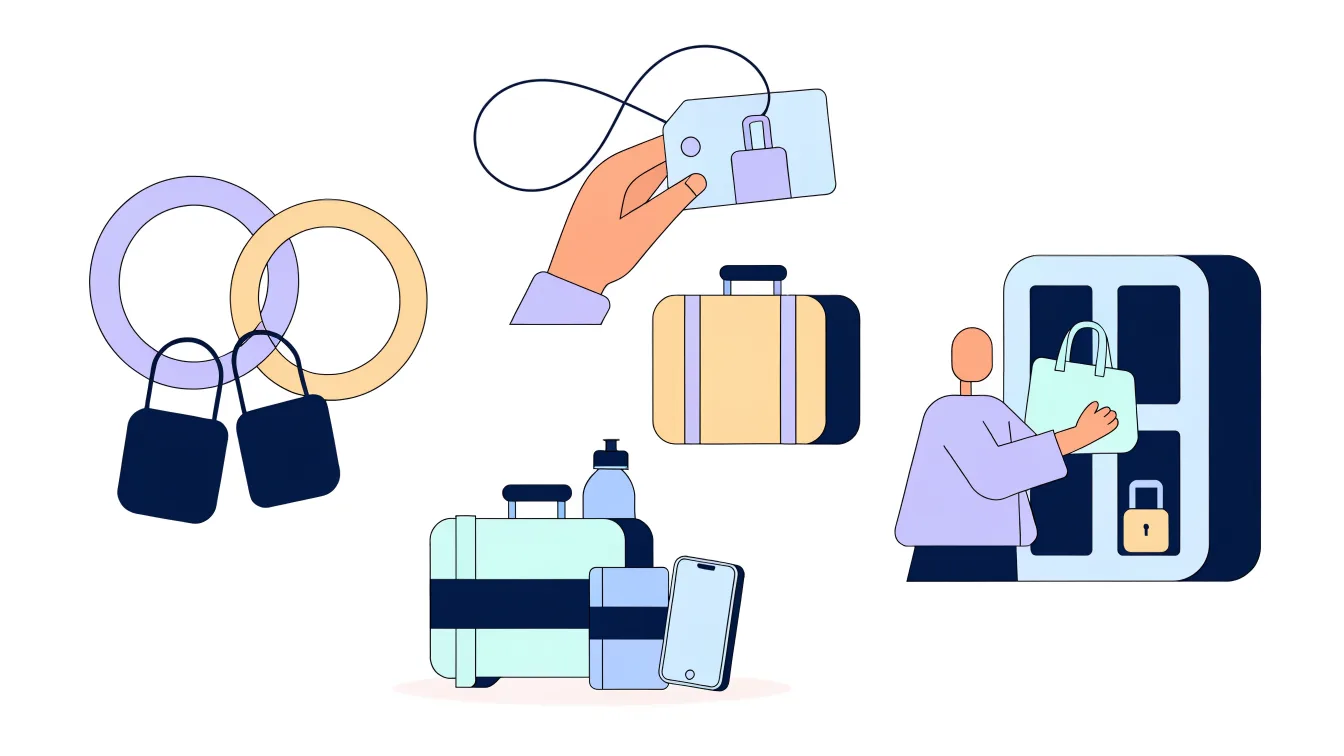
Learning how to protect luggage from theft means keeping essential valuables with you, supervising bags and making every handoff deliberate. DOT advises against relying on suitcase locks for valuables. Prepare identification and records as well, so you can act promptly if a bag disappears.
Plan how to protect luggage from theft at each handoff
Think through the places where the bag changes location or supervision. Your plan should cover check-in, security screening, baggage collection, transfers and hotel storage.
Use the table as an operational checklist, rather than a promise about any airport or hotel. Ask staff about the actual procedure where you are traveling.
| Journey stage | Keep with you | Confirm before leaving | Useful record |
|---|---|---|---|
| Airline check-in | Essential cabin items and documents | Correct bag count and destination | Bag identification tag |
| Security screening | All items after screening is complete | Every tray and bag has been collected | Description of anything missing |
| Baggage claim | Cabin bag while collecting the suitcase | Contact label matches your bag | Bag photograph and claim tag |
| Hotel arrival | Bags until staff explicitly receives them | Who has taken custody of each item | Storage acknowledgment where provided |
| Hotel collection | Storage token or receipt | Every bag and relevant compartment | Details of any discrepancy |
Give each handoff a clear ending. Do not move away while you are unsure whether staff has accepted a bag or a companion is watching it.
The wider bag security guide covers the other situations between these points.
Separate cabin essentials before leaving home
Create a small group of belongings that stays with you through the trip. DOT's packing advice identifies valuables, critical documents and irreplaceable items as things to avoid putting in checked baggage when possible. It also addresses bags that could be checked at the gate.
Pack with that possible handoff in mind. If your larger cabin bag is taken for checking, you should know which items to remove without unpacking everything in the boarding queue.
Give documents, payment essentials and needed devices assigned locations. Keep the arrangement simple enough to check before each transfer. Follow the airline's current size, item and baggage requirements before traveling.
Take a photograph of the packed bag and retain a brief contents record. Salt Lake City Police recommends photographs and a packing record as useful information following luggage theft.
Keep the record accessible separately from the suitcase. It should help identify belongings without requiring the missing bag to recover the information.
For the broader packing question, see carry-on packing rules. This preparation is about continuity through handoffs, not permission to carry every item in the cabin.
Use locks and identification for their actual purposes
A lock is one part of the arrangement, rather than storage protection for anything you cannot afford to lose. DOT's baggage guidance explicitly cautions against relying on suitcase locks for valuables.
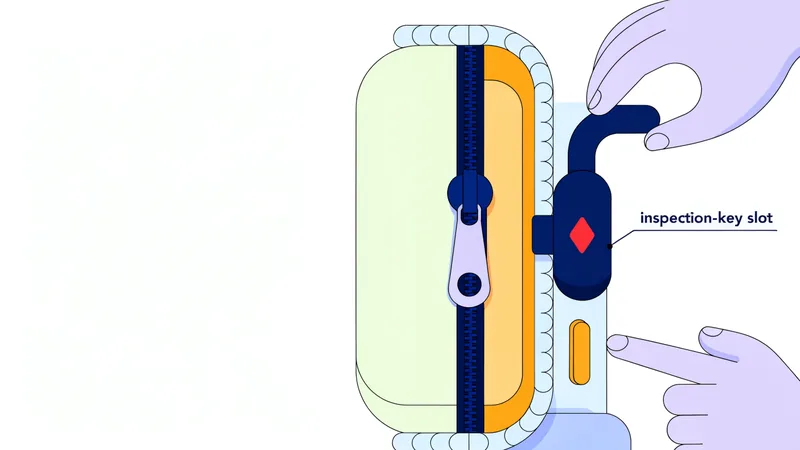
The same guidance explains that checked baggage may be opened for inspection. It points travelers toward locks security personnel can open and relock, and warns that other locks may be broken if necessary. Guidance checked November 2026.
For practical identification, use a contact label and keep the airline's bag tag record. DOT's current baggage tips recommend labeling checked bags with name, phone number and email address. Guidance checked November 2026.
Salt Lake City Police also recommends distinctive bag markings. Choose an identifier you can describe without assuming a ribbon or sticker establishes ownership by itself.
Keep a second contact card inside the bag, as recommended by Police.uk. Use the luggage-lock explainer for more on screening-compatible closures. Do not interpret the label as a guarantee against theft.
Follow a deliberate airport collection sequence

- Keep the claim record accessible. Know where the bag identification information is before you reach the carousel.
- Go to baggage collection without unnecessary delay. This follows Salt Lake City Police's airport-theft advice.
- Maintain control of your cabin belongings. Decide where they will be while you lift or inspect the suitcase. Avoid leaving one bag unattended to retrieve another.
- Identify the bag before leaving. Compare its contact tag, identifying details and your records rather than relying only on its color.
- Inspect and report concerns promptly. If it arrives open or damaged, check for missing contents and contact the airline before leaving the airport.
DOT's baggage advice recommends reporting problems before departure and having a report created. Guidance checked November 2026.
If a suitcase is missing, establish what the airline can tell you about its arrival. Avoid treating every delay as theft, or every missing bag as a routine delay. State what you observed and preserve the relevant records for staff.
Arrange hotel storage before walking away
Ask the hotel how luggage storage works before handing over the bag. Establish where items are kept, how collection is controlled and whether anyone remains responsible for supervising the area.
If staff provides a numbered receipt or token, retain it separately from the stored suitcase. Record your bag count and verify the items returned. These are practical handoff checks, not claims about a hotel's legal obligations.
Police.uk warns against leaving luggage unattended in hotel lobbies. A bag beside a reception desk should not be treated as accepted storage until staff confirms the arrangement.
For valuables, ask about the hotel's designated storage options and what instructions apply. Do not assume a locked suitcase is equivalent to a secure deposit arrangement.
Once in the room, follow the State Department's advice to check doors and windows lock properly. Keep your room key separate from the packet showing your room number. Guidance checked November 2026.
Before checking out, collect items from every storage location and count your bags. Leave time to resolve a discrepancy before rushing toward your transfer.
Common mistakes and the first response to a missing bag
Assuming a locked bag protects everything inside. Keep the lock in perspective and make the separate cabin-essentials decision before check-in.
Leaving one bag while collecting another. Plan the physical handoff with your companion or ask staff for assistance. Do not rely on an unspoken assumption about supervision.
Keeping every record in the suitcase. Maintain identification details and photographs through a separate accessible route.
Walking away from a vague hotel handoff. Confirm staff has received the bag and understand the collection process before leaving.
If a bag is missing, notify the organization handling it and explain the last confirmed location. For suspected theft, seek police assistance. Salt Lake City Police's airport guidance recommends reporting to the relevant authorities and airline.
Keep copies of reports and correspondence. For airline reporting procedures, see lost, delayed and damaged luggage. This is general information, not legal or financial advice.
Learning how to protect luggage from theft involves preparation and follow-through. No handoff checklist, lock or identifying mark supplies an absolute guarantee.

FAQ
Do suitcase locks prevent theft?
Do not rely on them to protect valuables. DOT's packing guidance specifically cautions against doing so. Use a suitable closure while maintaining control of belongings and keeping essential valuables with you. For checked baggage, also account for screening access and the possibility of inspection.
What information should I put on a luggage tag?
DOT recommends name, phone number and email address for checked baggage. Keep the information current and legible. Add identification inside the bag too, and retain your airline claim record separately. A photograph of the suitcase can help you describe it when reporting a problem.
Is it safe to leave luggage at a hotel before check-in?
Ask about the actual storage arrangement rather than assuming every hotel offers the same supervision or collection controls. Confirm staff has accepted each bag, retain any receipt and understand how retrieval works. Keep essential valuables with you and avoid leaving bags unattended in the lobby while arranging the service.
What should I do if a bag arrives open?
Check for missing or damaged contents and contact the airline before leaving the airport. DOT's baggage advice recommends having a report created. Record what you observed and keep the claim information. If you suspect theft, also seek assistance from the relevant police authority.
Sources
- transportation.gov/airconsumer/plane-talk-tips-avoiding-baggage-issues
- transportation.gov/lost-delayed-or-damaged-baggage
- police.slc.gov/2022/06/14/slcpd-seeking-communitys-help-to-identify-luggage-thief
- police.uk/cp/crime-prevention/personal-safety-how-to-stay-safe/visiting-london
- travel.state.gov/en/international-travel/planning/guidance/lodging-safety.html