Art portfolios and artist bags
An art portfolio bag should fit your largest protected artwork, including its backing, mount, or presentation book. Choose a flat carrier when keeping work flat matters. Consider a tube only after establishing that the particular piece can be rolled.
Which art portfolio bag format do you need?
Separate carrying, presenting, and storing work before choosing a format. Write down which of those jobs the bag must perform.
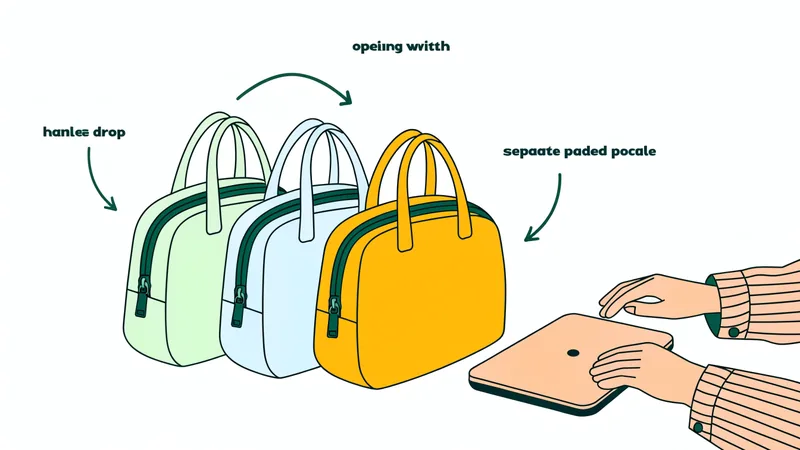
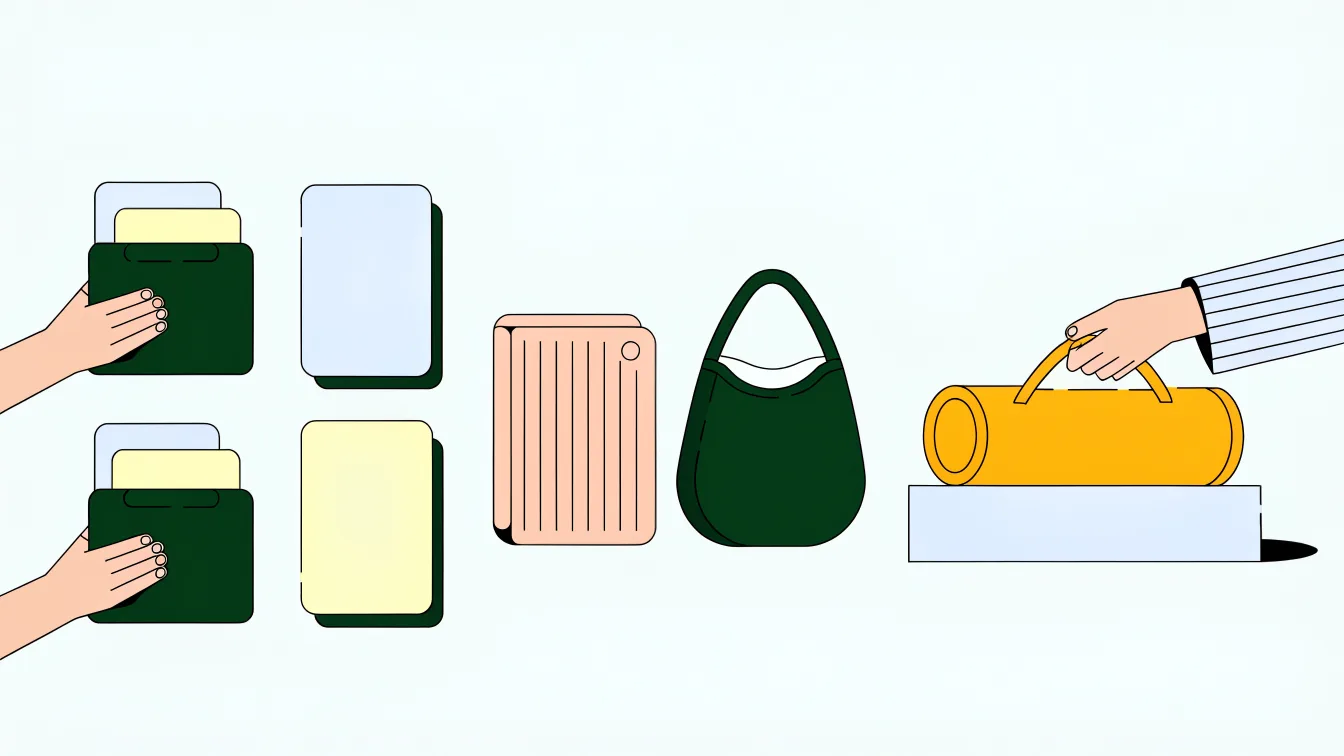
Published examples include a zippered case with internal pockets, a rigid folder with ties, and a soft felt carrier. Zippered case, rigid folder, felt carrier
Use those construction differences to frame your comparison.
| Format | Published construction example | Selection priority | Question to resolve |
|---|---|---|---|
| Zippered art case | Structured case with internal pockets | Access to flat contents | Are presentation inserts included? |
| Rigid portfolio folder | Stiff covers, internal flaps, ribbon ties | Support around loose work | Does the protected stack fit? |
| Soft artist carrier | Felt body with reinforced handles | Carrying an existing pad or enclosure | What supports the artwork inside? |
| Expandable envelope | Coated polypropylene and a gusset | Accommodation for a thicker load | What are the listed compatible sizes? |
The envelope construction is documented separately in its maker specifications.
Treat this as a comparison of formats, without assuming that one is suitable for every medium.
For broader carrying choices, see the work bags guide. Keep art-specific requirements at the center of the decision, particularly support, opening size, and contact with the artwork.
How do portfolio sizes compare with paper sizes?
Begin with the paper, then measure the complete protected piece. The dimensions below describe sheets rather than guaranteed bag interiors.
| Sheet format | Sheet dimensions, inches | Metric dimensions | Fit issue to resolve |
|---|---|---|---|
| A4 | 8.27 x 11.69 | 21.0 x 29.7 cm | Include the folder or pad cover |
| A3 | 11.69 x 16.54 | 29.7 x 42.0 cm | Compare with the loading opening |
| A2 | 16.54 x 23.39 | 42.0 x 59.4 cm | Include backing and mounts |
| A1 | 23.39 x 33.11 | 59.4 x 84.1 cm | Check the complete protected outline |
| ARCH C | 18 x 24 | 45.72 x 60.96 cm | Do not substitute A2 dimensions |
| ARCH D | 24 x 36 | 60.96 x 91.44 cm | Do not substitute A1 dimensions |
Source: published paper size list.
For a hypothetical example, a 16 x 20-inch print might sit within an 18 x 24-inch mount. Compare the carrier with the mount.
Also measure the stack's thickness, including any presentation book. Ask whether the listing gives overall bag dimensions, usable interior dimensions, or intended sheet size.
Record those measurements consistently for every carrier on your shortlist. Avoid ordering from the format name alone.
Should you choose a rigid case or a soft carrier?
Decide what will support the work before deciding how you want to carry it. If you already use a protective enclosure, measure that enclosure first.
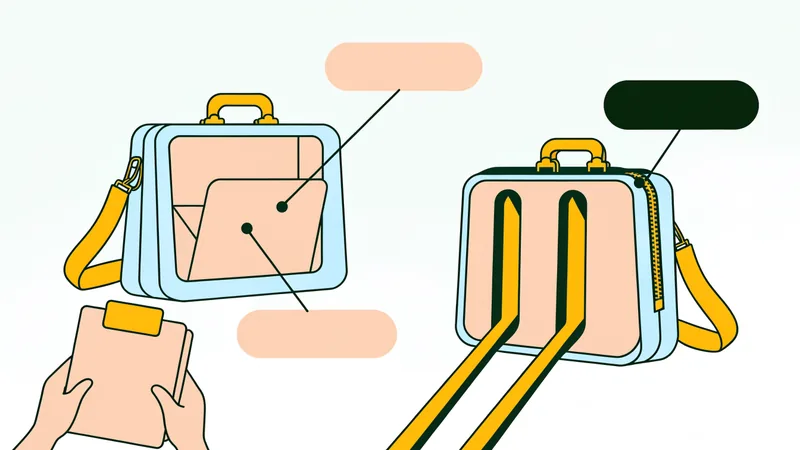
A rigid folder example has internal flaps on three sides and ribbon ties. A structured zippered case example has internal pockets. Folder construction, case construction
By comparison, the published felt carrier uses a soft body and reinforced handles. Soft carrier specification
These details identify different constructions. They do not establish crush ratings or prove that loose work can travel without additional support.
Before choosing, ask to see the empty interior and the opening. Determine where the protected artwork will sit and how you will remove it.
Plan around your destination, too. Decide whether you will lay the carrier flat, remove a presentation book, or display pieces individually.
For a crowded commute, rehearse carrying a board matching the protected artwork's size. Include any second bag you normally take.
For more structured transport, ask about the complete case's protection specifications. Choose around the work and route, without borrowing claims from a different case.
When does a drawing tube make sense?
Consider a tube for work already intended to travel rolled. Do not select one merely because a flat carrier seems awkward.
Published telescoping designs use a plastic body with adjustable length and a shoulder strap. Drawing tube construction
For a hypothetical poster measuring 24 x 36 inches, one possible roll has a 24-inch axis. Assess the protected roll's full length and diameter.
That geometry does not establish whether the poster's paper, printing, or surface can tolerate rolling. Resolve that question before packing.
When comparing tubes, request usable internal length, internal diameter, cap clearance, and the length-locking instructions. Compare those figures with the protected roll rather than the unrolled sheet.
Also decide how you will retrieve the contents without pulling directly on the artwork. Follow instructions supplied with the print or its protective enclosure.
The Library of Congress advises consulting a paper conservator when unrolling presents unacceptable risk or the paper or media is questionable. Paper handling FAQ
Use that same caution when deciding whether valuable or fragile work belongs in a tube. Avoid forcing it into a smaller diameter for convenience.
What do material descriptions actually tell you?

Look for the materials that contact the work, as well as the exterior. Ask which component each claim describes.
Published constructions range from faux-leather cases to felt carriers and coated polypropylene envelopes. Case material, felt construction, envelope material
Use those descriptions to identify questions about cleaning, structure, and contact surfaces. Avoid ranking preservation performance from the outer material alone.
One rigid portfolio specifically lists an acid-free interior. That claim describes its interior, rather than every component added to your packing arrangement. Interior specification
For preservation, the Library of Congress describes supportive enclosures such as acid- and lignin-free folders, mats, and document boxes. Preservation housing guidance
Choose the artwork's enclosure separately from the bag's handles, pockets, and exterior finish. Seek guidance appropriate to the particular medium.
Likewise, the envelope maker describes weather resistance. That wording alone does not promise protection during immersion. Weather-resistance description
Compare the exact weather-protection claim on each carrier. Request specific instructions before relying on a bag in rain.
How should you organize and pack the contents?
Plan the packing sequence before putting artwork into the carrier. Work on a clear surface with enough room for the largest piece.
The Library of Congress recommends clean hands and workspaces, and keeping food and drinks away from works on paper. Handling guidance
Use this checklist to organize the task. The sequence is a planning aid; artwork-specific packing instructions take priority.
- Identify the work and its required protective enclosure.
- Measure the enclosed piece, including depth.
- Compare those dimensions with the carrier and opening.
- Assign separate places for accessories.
- Practice loading and removal using a substitute board first.
For instance, use a blank board matching a mounted print's outline. Establish whether you can insert and remove it without pressing against the closure.
Decide where tools, liquids, and refreshments will travel. Do not allocate that space inside the artwork compartment by default.
Record contents on a separate packing list when needed. Avoid attaching labels directly to the work.
For irreplaceable pieces, obtain a packing plan from a conservator or specialist art handler. The Library of Congress recommends conservation advice for valuable or complicated paper objects. Conservation guidance
How do you choose the right size and care for it?
Make your comparison around a complete carrying session. Include leaving the studio, traveling, opening the carrier, presenting the work, and packing again.
An art portfolio bag needs enough room for that routine without requiring you to force the contents into place. Choose only after resolving the interior measurements.
Published examples show why the distinction matters. One envelope measuring 20 x 26 inches is listed for 18 x 24-inch artwork and A2 sheets. Carrier-to-artwork sizing
That is a specific compatibility example, rather than a clearance formula to apply to other bags.
Confirm which accessories are supplied. The structured case example states that inserts are not included. Included-components information
For cleaning, obtain instructions for the exact carrier. Remove artwork before following the approved cleaning routine, and keep maintenance materials away from the work.
At home, choose storage around the artwork's requirements. The Library of Congress recommends supportive enclosures, stable conditions, and minimal light exposure. Storage guidance
Keep the bag's instructions and your measurements together. Update the measurements whenever you change mounts, backing, or presentation books.

FAQ
Will an A2 portfolio hold 18 x 24-inch paper?
Compare actual dimensions. A2 measures 16.54 x 23.39 inches, so an 18 x 24-inch sheet is larger in both directions. A carrier labeled A2 may have extra space, but the label alone does not establish fit. Request its usable interior measurements and opening dimensions. Paper size list
Does an art portfolio bag include presentation sleeves?
Check the contents list for the exact model. A carrying case, presentation book, and sleeve set are separate things to account for when planning your load. One structured case's maker explicitly says inserts are not included. Add the chosen book or sleeves before measuring the protected stack. Case contents
Can I put charcoal drawings in plastic sleeves?
Seek guidance for that medium before choosing a sleeve. The Library of Congress warns that polyester film can develop static that lifts powdery media, including charcoal and pastel. Follow suitable preservation advice for the drawing rather than assuming that any clear sleeve provides appropriate protection. Paper care guidance
Is a drawing tube suitable for valuable artwork?
Establish whether the particular work can tolerate rolling before choosing a tube. Consider the paper, surface, existing condition, and consequences of damage. The Library of Congress advises consulting a conservator when unrolling risk is unacceptable or the paper or media is questionable. Obtain appropriate advice before changing its storage shape. Paper FAQ
Related guides
Sources
- daler-rowney.com/product/classic-art-case
- daler-rowney.com/product/earthbound-portfolio
- itoya.com/products/transport-and-storage-portfolios/profolio-midtown-bag
- itoya.com/products/transport-and-storage-portfolios/profolio-artenvelope-pro
- ij.manual.canon/ij/webmanual/EasyPhotoPrintEditor/S/1.2/ET/EPE/epe_51.html
- china-conda.com/accessories/drawing-tools/telescopic-drawing-tube.html
- loc.gov/preservation/care/paper.html
- loc.gov/preservation/about/faqs/paper.html