Vacuum storage bags
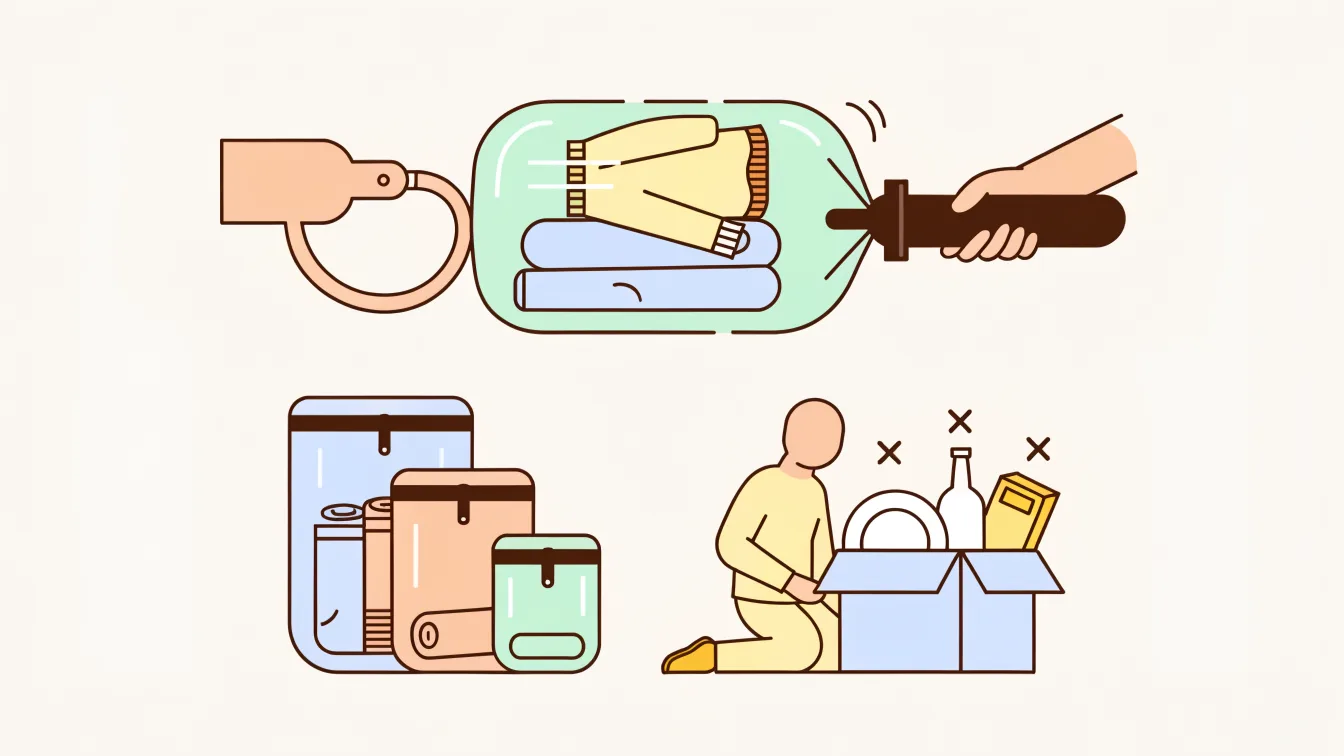
Vacuum storage bags reduce the space occupied by suitable soft belongings by removing air through a valve or roll-out channel. Choose the closure and size around the contents and destination. Check the textile's storage instructions before compressing it, especially for long periods.
How vacuum storage bags work
These bags combine a sealable opening with an outlet for escaping air. With a conventional design, you close the opening and remove air through a valve. The maker's instructions describe using a vacuum-cleaner hose and then securing the valve.
A travel roll version uses a different outlet. Its one-way channel sits along the end seam, allowing you to roll air out without the same visible hose valve.
| Format | Air-removal method | Detail to compare | Source |
|---|---|---|---|
| Flat valve bag | Compatible vacuum hose | Closure, valve and nominal dimensions | Vacuum-hose compatibility |
| Gusseted valve bag | Compatible vacuum hose | Main panel dimensions and expanded base | Gusseted-bag specification |
| Travel roll bag | Rolling toward a one-way outlet | Rolling direction and luggage footprint | Roll-bag specification |
Choose by how you will reopen and repack the contents. At home, identify the equipment you will use. For travel, consider the return journey as carefully as departure.
Avoid choosing solely from a dramatic before-and-after photograph. Compare the operating instructions, intended contents and available storage space before selecting a format.
Compare dimensions before size names
Small, large and extra large are useful labels within a range. Use the actual measurements when comparing different designs.
| Published example | Approximate dimensions in inches | Maker's metric dimensions | Source |
|---|---|---|---|
| Small travel roll bag | 9.8 × 15.0 | 25 × 38 cm | Small roll-bag specification |
| Medium travel roll bag | 15.7 × 19.7 | 40 × 50 cm | Travel-set specification |
| Large travel roll bag | 19.7 × 27.6 | 50 × 70 cm | Travel-set specification |
| Gusseted household bag | 19.7 × 31.5; 4.9-inch base | 50 × 80 cm; 12.5 cm base | Large gusseted specification |
| Larger gusseted household bag | 23.6 × 35.4; 5.9-inch base | 60 × 90 cm; 15 cm base | Extra-large gusseted specification |
Inches above are calculated from the listed metric dimensions and rounded. Treat these as nominal bag measurements, not the guaranteed shape of a compressed bundle.
Fold the intended contents and measure their outline before choosing. Then measure the shelf, storage box or suitcase compartment where the finished package will go.
For a gusseted model, include its base measurement in the comparison. Do not multiply flat panel dimensions to invent a usable liter capacity.
Read material claims and textile instructions separately
Check what the manufacturer says about the complete bag: film, closure and outlet. A material name alone does not answer questions about suitable contents.
The gusseted example uses a multilayer laminated blend containing nylon. That is a specification for that range. Keep it separate from promises about every bag's puncture resistance, service life or waterproof performance.
Next, read the storage directions for the clothing or bedding. Packmate's guidance urges particular caution with down-filled items, padded jackets, delicate fabrics and tailored clothing.
For sleeping bags, Sea to Summit explicitly advises against prolonged compression of down or synthetic insulation. Store those items according to their own maker's directions.
Give historic or fragile textiles a separate preservation plan. The Canadian Conservation Institute recommends supportive flat storage, minimal folding and appropriate lining materials.
Set aside anything with instructions against compression. Ask the item's maker about uncertain cases before packing. Ordinary clothing-storage bags offer another format to consider when compression is unsuitable.
For mixed belongings, sort by storage instructions before choosing bag sizes. Put items requiring roomy storage into their own group. Keep fragile pieces out of the general packing batch while you arrange suitable support or seek conservation advice.
Pack, seal and remove air in the right order
First, choose one identifiable group of suitable contents. Finish their cleaning and drying routine before beginning the sealing process.
Follow the exact model's instructions for filling and closure. Packmate's FAQ recommends leaving a couple of inches between the contents and zipper, and keeping heavy or sharp objects out.
| Stage | What to do | What to check before continuing |
|---|---|---|
| Fill | Arrange the intended clothing or bedding | Contents stay clear of the closure |
| Seal | Join the opening along its full length | No section remains separated |
| Remove air | Use the specified hose or roll-out method | Outlet remains accessible |
| Finish | Secure the valve where fitted | Closure and outlet follow the model's instructions |
These steps follow the maker's packing sequence. Do not improvise a stronger suction setting or a different adapter when the instructions specify otherwise.
Keep the bag somewhere accessible while checking the finished result. Before moving it into storage, confirm that the intended label remains readable and the package fits its assigned space.
If the opening is difficult to join, remove some contents rather than pulling the edges together under tension. Follow the maker's troubleshooting instructions before trying again.
Label the group before putting it away. Record which room it belongs to and whether it contains a complete set. Keep the label on a designated label area or outer container, following the bag's instructions.
Choose travel versions around the return journey

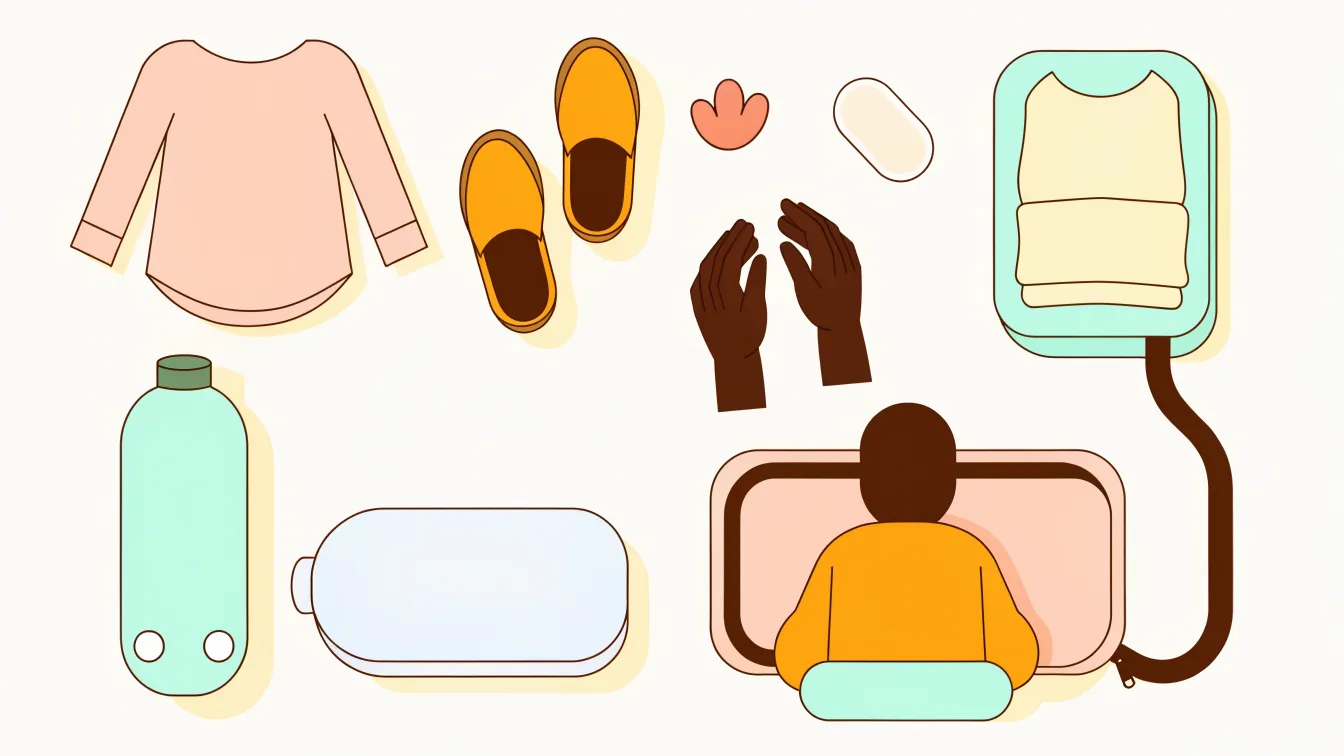
For a trip, decide how you will repack after opening the bag. A travel roll design expels air without a vacuum cleaner, which gives you a different routine from a hose-operated model.
Allow yourself a practical place to roll and seal it. Before departure, rehearse with the luggage you intend to use. Choose a packing arrangement you can reproduce at the destination.
Compression saves space rather than clothing weight, as the travel-bag maker points out. Weigh the complete suitcase after packing, and confirm your operator's current allowance before traveling.
Keep frequently needed items outside the compressed group. For example, separate the change of clothing you expect to use before reaching your accommodation.
Use packing cubes when you primarily want organization, and compare compression only where it serves the trip. Assign worn clothing to a separate group using the laundry-bag guide.
Before the journey home, reassess the contents rather than automatically repacking everything together. Finish drying damp garments and follow their care directions before placing them into sealed storage.
Troubleshoot expanding bags without guessing
If a package starts expanding, inspect the closure, valve and film in that order. Packmate identifies incomplete seals, unsecured valves, punctures and overfilling as possible causes.
Begin with the model's closure check. Open and reseal the opening as directed, keeping the joining surfaces clear. Then inspect the valve and cap where fitted.
Look over the film, including corners and the base. The same troubleshooting guidance recommends examining areas pressed against hard fittings or rough storage surfaces.
Before repeating the process, note what happened. Did the package expand immediately, after relocation or after another item was placed beside it? Use that information when asking the manufacturer for help.
Do not rely on a guessed adhesive repair for long-term textile storage. Ask the maker whether the damage is repairable and what method it permits.
Once the bag holds its intended shape, reconsider the storage location. Keep the closure accessible for inspection instead of burying the package beneath unrelated belongings.
For transport, use a suitable outer carrier and follow its loading instructions. The moving-bag guide covers handles, dimensions and published load ratings.
Store dry contents and look after the empty bag
Moisture control comes before compression. The EPA advises against enclosing wet or mold-affected materials, and recommends addressing the moisture source.
Choose a clean, dry location and inspect it before putting textiles away. If you find dampness, resolve that issue before returning the belongings to storage.
After emptying a bag, inspect its closure, film and outlet. Follow its cleaning instructions, then put the slider and any removable parts where you can find them next time.
Packmate's FAQ advises returning the slider to the end of the bag after sealing or emptying. Keep the model's instructions with the stored bag, especially when several people share the task.
Keep empty bags and packaging out of children's reach. The CPSC warns that thin plastic bags and packaging can cause suffocation; follow the product's warnings as well.
Before the next use, check the textile's instructions again. A bag you previously used for ordinary clothing should not determine how you store a different, more delicate item.
FAQ
Do vacuum storage bags need a vacuum cleaner?
The mechanism determines the equipment. Conventional valve models use a compatible hose, while travel roll versions push air through a one-way outlet by rolling.
Read the exact model's instructions before packing. For travel, choose a method you can also use when repacking for the return journey.
Can I compress a down sleeping bag all winter?
Follow the sleeping-bag maker's specific storage directions. Sea to Summit recommends uncompressed storage because prolonged compression can damage insulating loft. Once fully dry, use the prescribed roomy storage arrangement rather than assuming household compression is appropriate for the whole season.
Why does my sealed bag fill with air again?
Possible causes include an incomplete closure, an unsecured valve or damage to the film. Follow the maker's inspection sequence and check for overfilling as well. Record when expansion occurs and ask about repairs or replacement if the problem remains after the recommended checks.
Will compression make my suitcase lighter?
Treat compression as a space-saving method. The travel-bag maker explicitly distinguishes space savings from weight savings.
Weigh the packed luggage and confirm the operator's current allowance before departure. Consider the return journey too, including anything you expect to add while away.
Can I seal clothing that still feels damp?
Finish drying it before placing it into sealed storage. The EPA advises against enclosing wet materials.
Follow the clothing's care directions and the bag's instructions, and address any dampness in the storage location before packing. Compression should follow suitable preparation, rather than replace it.
Related guides
Sources
- packmate.co.uk/blogs/news/how-to-use-vacuum-bags-properly
- packmate.co.uk/products/x5-travel-vacuum-roll-storage-bags
- packmate.co.uk/products/x4-travel-roll-storage-bag
- packmate.co.uk/products/x2-extra-large-high-volume-vacuum-storage-bags
- packmate.co.uk/products/high-volume-vacuum-storage-bags
- packmate.co.uk/pages/faqs
- packmate.co.uk/blogs/news/how-to-stop-vacuum-bags-from-leaking-air
- seatosummit.com/blogs/product-care/how-to-clean-fix-and-store-your-gear-while-you-re-st…
- canada.ca/en/conservation-institute/services/conservation-preservation-publications/can…
- epa.gov/indoor-air-quality-iaq/biological-contaminants-and-indoor-air-quality
- cpsc.gov/Newsroom/News-Releases/2023/CPSC-Reminds-Early-Holiday-Shoppers-to-Follow-Thes…