Road trip packing: bags that work in a car
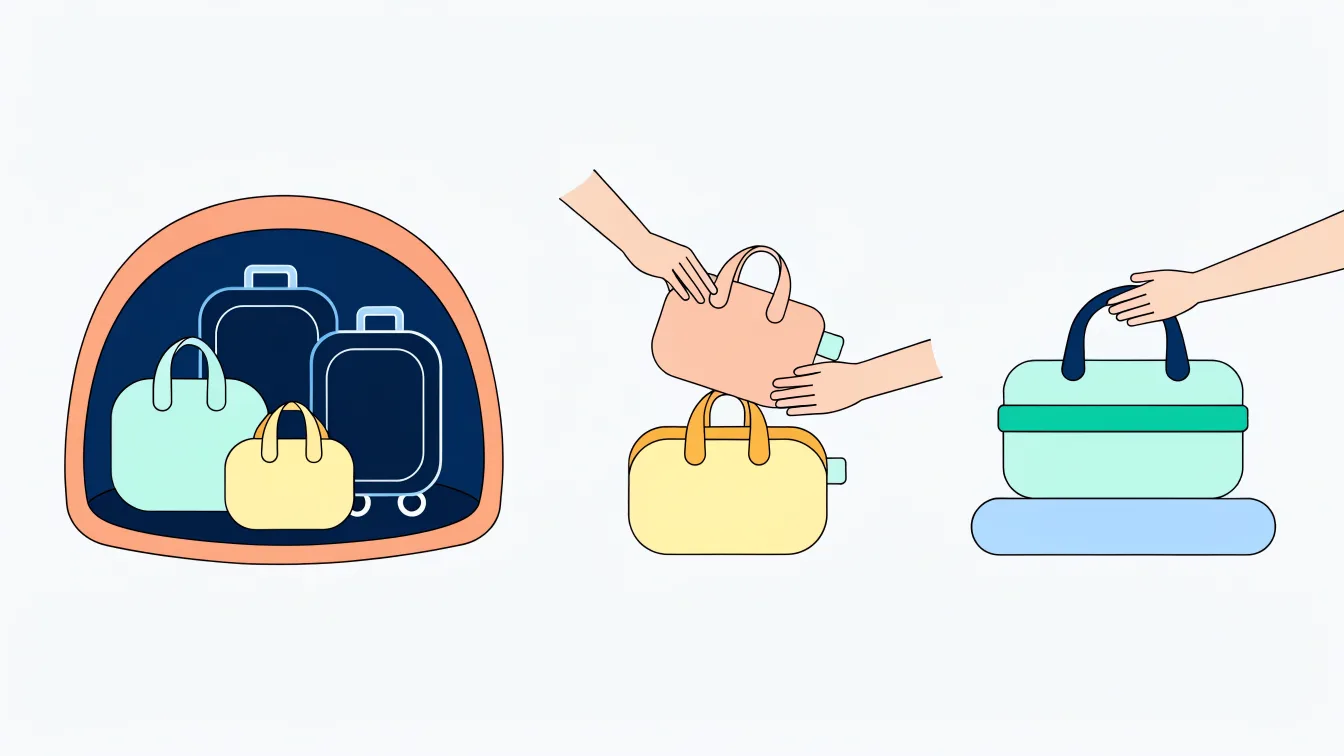
Road trip packing works best when you separate overnight luggage, stop essentials, and food before loading the car. Choose bags around your trunk and unloading routine. Secure the load using your vehicle's instructions and NHTSA's cargo guidance.
Choose bags around the trunk and overnight stops
Start with the luggage you already own. Place the packed bags beside the empty trunk, then decide which need to leave the car at each stop.
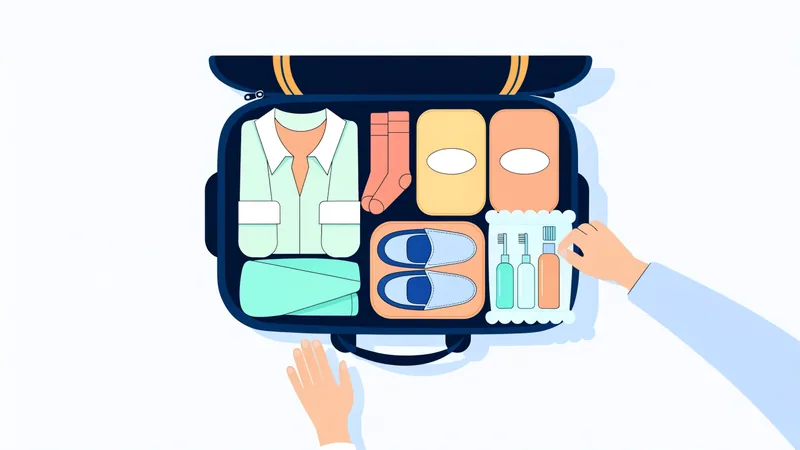
For a changing route, consider dividing clothing between a main bag and an overnight bag. That lets you unpack selectively at short stays.
| Your situation | Packing choice to consider | Decision before departure |
|---|---|---|
| Irregular trunk space | Partly filled soft bag | Can you lift and close it without forcing the zipper? |
| Long walk from parking | Wheeled suitcase | Is the unloading route suitable for wheels? |
| Frequent overnight stops | Small overnight bag | Does it contain everything for the next stay? |
| Shared family luggage | Labeled clothing pouches | Can each traveler identify their own items? |
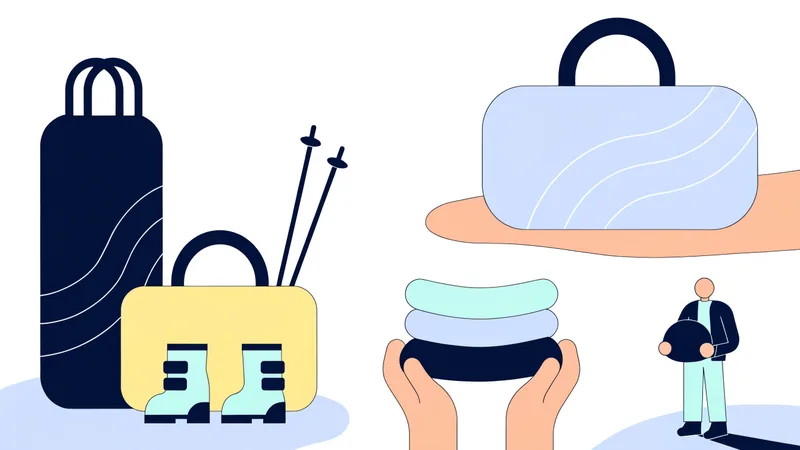
Use the duffel bags guide when deciding whether that shape suits your load. Keep breakable belongings in packaging appropriate to the item.
A soft bag still needs restraint. A hard suitcase still needs room to open. Neither shape solves poor loading by itself.
For a rental car, allow for the actual vehicle you receive. Make the final arrangement before leaving the collection area, with doors and trunk fully closed.
Build a road trip packing system for stops
Organize belongings by when you need them. Use the packing guides hub for the wider packing plan, then assign each pouch a destination.
- Pack the main luggage. Put destination clothing and belongings needed after arrival together.
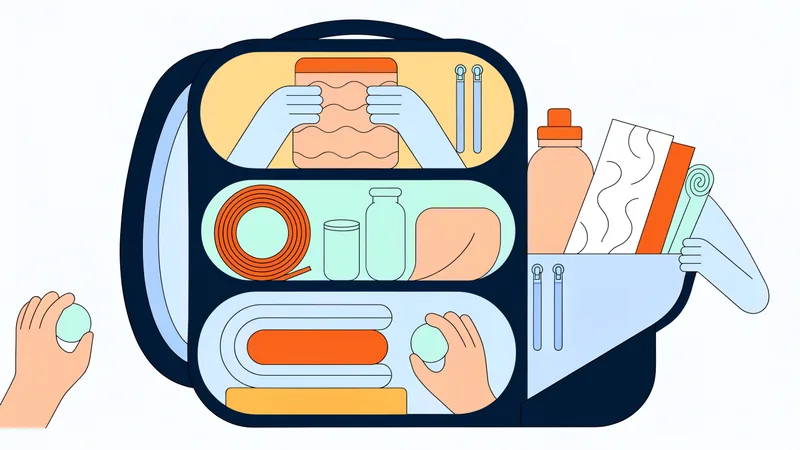
- Prepare the overnight bag. Include sleepwear, toiletries, and the next change of clothes. Refill it at longer stays.
- Set up the stop bag. Gather tissues, charging cables, sunglasses, and the things passengers routinely request.
- Separate personal essentials. Keep identification, payment cards, and necessary medicines with their owner when leaving the vehicle.
- Identify the roadside kit. Keep it distinct from vacation luggage and locate it before loading anything over its access point.
NHTSA's suggested roadside supplies include a phone and charger, flashlight, first aid kit, drinking water, and nonperishable food.
Pack around your route rather than copying every possible accessory. Assign responsibility for shared items so the same charger does not appear in every bag.
Plan retrieval at a parked stop. Keep bags away from driving controls, and have the driver stop before dealing with items that require attention.
Place the cooler for access and temperature control
Give the cooler a planned location before filling the remaining space. You should be able to reach its lid at stops without unloading loose luggage.
Its position must also work with the vehicle's restraint arrangements. Follow the owner's manual rather than balancing a loaded cooler on other bags.
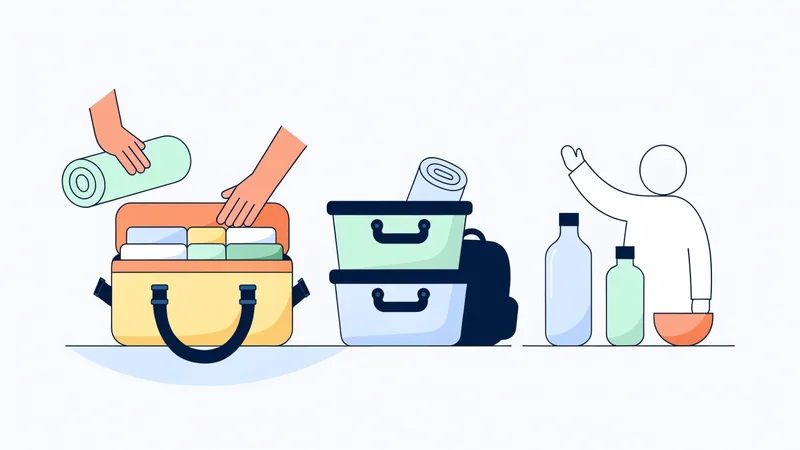
Use the cooler bags guide to organize the food container separately from clothing. Keep food handling supplies together so lunch does not require opening your toiletry bag.
USDA recommends packing perishables directly from the refrigerator or freezer with ice or freezer packs. Keep raw meat separately wrapped from ready-to-eat food.
Where space permits, separate drinks from food you need later. USDA recommends this approach to reduce repeated opening of the food cooler.
Location alone does not establish food safety. Maintain cold food at 40°F or below, approximately 4°C, following Nebraska Extension's temperature guidance.
Pack only the meals you can manage with your available cold storage. Arrange replenishment before the cold source runs out, rather than relying on the destination being nearby.
Load the car in the order you will unload

Lay out the planned load first. Remove belongings that have no clear purpose, especially duplicate bulky items added because the car initially looks spacious.
Use the vehicle's actual loading instructions and permitted weight. As a manufacturer example, Volvo's XC90 guidance places heavy cargo low and calls for secure loads.
The same guidance warns against obstructing airbags and notes that large trunk items can obscure the rear view. Apply your own model's instructions to its layout.
Place destination luggage before the overnight bag, while preserving the access you need for food and roadside supplies. Attach restraints as the manual directs.
Do a final access check with everyone ready to travel. Confirm that passengers can use their seats and belts without moving luggage into an unsafe position.
Revisit the arrangement after shopping, switching drivers, or changing accommodation. A layout that worked at departure may need reorganizing after the first unloading.
NHTSA advises double-checking cargo security. Include that check when you repack, rather than treating it as a departure-only task.
Packing checklist grouped by bag
Use this as an allocation sheet. Tick belongings after placing them in their assigned container, then remove rows that do not apply to your trip.
| Bag or container | Suggested contents | Access plan |
|---|---|---|
| Main luggage | Destination clothes, spare shoes, activity clothing | Unload at longer stays |
| Overnight bag | Sleepwear, next outfit, toiletries, charging cable | Take into each short stay |
| Stop bag | Sunglasses, tissues, activity items, shelf-stable snacks | Retrieve while parked |
| Personal pouch | Identification, payment cards, necessary medicines | Take when leaving the car |
| Cooler | Planned meals, cold source, separately wrapped ingredients | Open at meal stops |
| Roadside kit | Supplies chosen from official guidance and vehicle instructions | Keep its access route clear |
| Laundry bag | Used clothing, separate shoe wrapping | Empty when laundry is available |
These are suggested divisions, not mandatory bag counts. Combine categories if the load is easier to handle that way.
Write the next overnight bag's contents before repacking at a longer stay. Include what you actually used, then replace depleted toiletries and missing chargers.
Keep a small written inventory of shared belongings. It is particularly useful when several people carry bags between the car and different rooms.
Common mistakes
Packing every night into the largest case. Put the next stay's belongings in the overnight bag before leaving your accommodation. That avoids searching through destination clothing outside reception.
Treating spare space as extra capacity. The vehicle's weight limits still apply. Follow its specifications, as Volvo's loading guidance explicitly requires.
Burying the roadside kit. Identify where it lives before loading. Leave a practical retrieval route instead of filling every gap around its compartment.
Depending on cooler size alone. Cold storage also needs a cold source and temperature control. Use the cited food guidance rather than guessing from how the container feels.
Repacking without reassessing restraints. Shopping bags and laundry change the load. Secure the revised arrangement before resuming the journey, including after a quick overnight stop.
Leaving the return journey unplanned. Bring a laundry container and decide where souvenirs will go. If your load grows beyond the planned space, remove or rearrange belongings before driving.
FAQ
Are soft bags better than suitcases for road trips?
Choose according to your trunk and unloading route. Consider soft bags for a divided clothing system and wheeled cases for accommodation transfers. Try the actual packed arrangement before departure. The useful choice is whichever you can load, restrain, retrieve, and carry comfortably without forcing the available space.
What belongs in a road trip day bag?
Put the things passengers use at stops together: sunglasses, tissues, charging cables, activity items, and suitable snacks. Keep personal essentials with their owner when leaving the vehicle. Separate this stop bag from destination clothing so retrieving something small does not involve opening every suitcase.
How should I organize road trip packing for overnight stops?
Prepare an overnight bag containing sleepwear, toiletries, the next outfit, and a charging cable. Refill it during longer stays. Keep destination clothing in the main luggage until needed. Adjust the divisions around the people carrying bags and the accommodation's access, rather than adding containers automatically.
How long can picnic food sit outside the cooler?
USDA guidance says to discard perishables left out beyond two hours, or one hour above 90°F, approximately 32°C. Those are limits for food outside proper cold storage. Keep meals under suitable temperature control during travel and discard food that exceeds the guidance.