Best weekender bags for short trips
We may earn a commission when you buy through links on this page. It never changes what a guide says. How this works.

The best weekender bags for short trips sit in the 30–50L range and match your shoes, carry method and transport. BÉIS suits compartment-first packing; Patagonia suits a simpler clothing load. None of these five bags meets American Airlines’ personal-item dimensions at its full published size, so plan accordingly.
Quick picks
| Pick | Best for | Key spec | Price tier |
|---|---|---|---|
| BÉIS The Weekender | Shoes below clothing | 42L; convertible bottom compartment | $$ |
| Away The Weekender | Laptop and suitcase pairing | 38L; exterior laptop pocket | $$$ |
| Patagonia Black Hole Duffel 40L | Compact outdoor weekends | 19.7 × 12.5 × 8.5 inches | $$$ |
| Osprey Daylite Duffel 45 | Low empty weight | 45L; 1.4 lb | $$ |
| Eagle Creek Cargo Hauler 40L Duffel Bag | Divided gear storage | Two end compartments | $$ |
Price tiers use manufacturers’ US list prices checked November 5–7, 2026: $ under $50; $$ $50–149; $$$ $150–299; $$$$ $300 and above. They do not reflect promotional discounts.
How we chose
Bags.net did not test these bags. We compared makers’ US model pages, published dimensions, weight, capacity, storage features and available warranty information. Airline comparisons use the operator’s own rules.
Picks cover approximately 30–50L weekend loads, with separate roles for shoes, laptops and carrying on foot. Recommendations are editorial judgments from specifications, not comfort or durability scores. We flag conflicting measurements and distinguish an overhead bag from a personal item.
What to look for
Start with your complete weekend load
Use 30–50L as a shopping range, not a promise about nights away. Two travelers taking the same trip can need different volumes. A second pair of bulky shoes may matter more than another shirt.
Lay out clothing, toiletries, chargers and footwear before choosing a size. For a two-night example, decide whether you need separate dinner shoes or can wear one pair throughout. This is a packing exercise, not a measured capacity claim.
If you already own a suitable bag, avoid buying a larger replacement just because the trip lasts longer. Laundry access and rewearing layers can change the calculation. Our weekender bags guide explains the main layouts.
Check three dimensions, not just liters
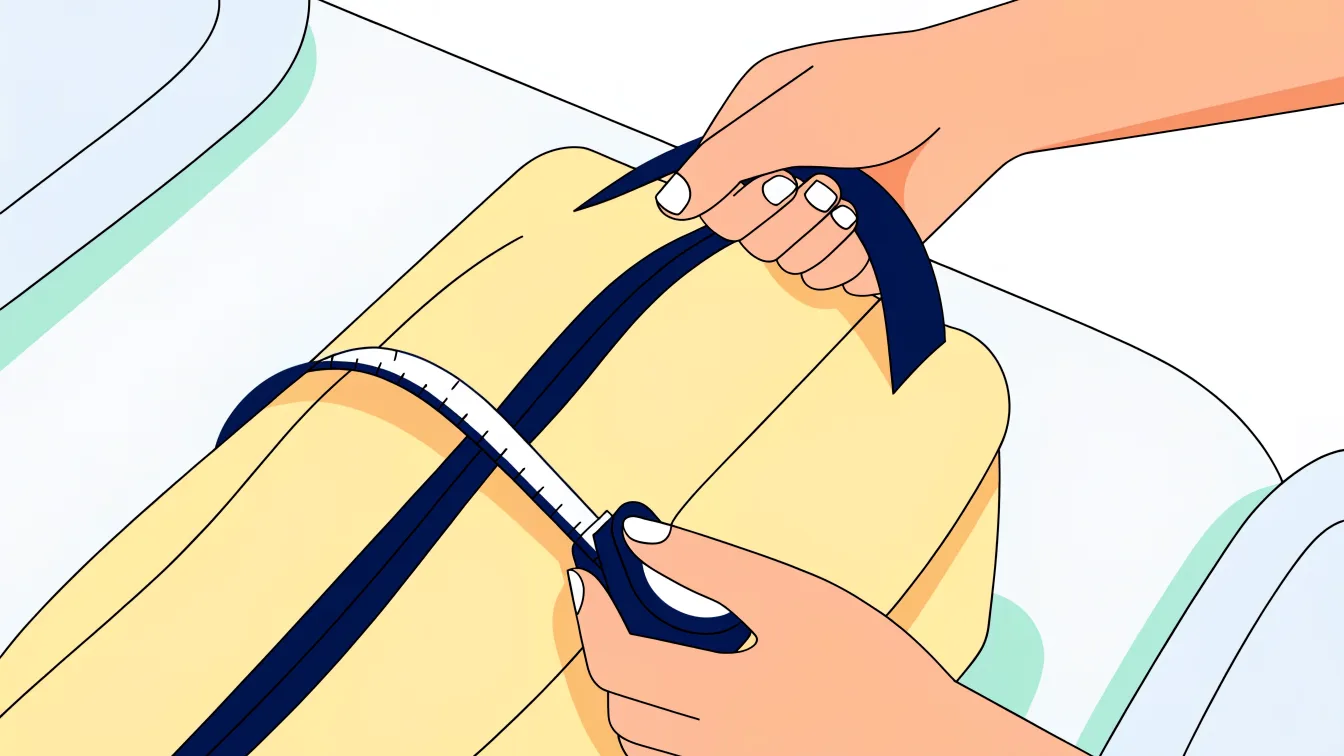
A tall shoe compartment can make an otherwise compact bag too deep for airline limits. Compare the packed exterior, including projecting pockets and handles, against the allowance for your ticket.
The American figures above provide one example, not universal permission. A soft bag still needs to fit the relevant sizer. Consult our airline baggage rules guide before comparing models.
Do not assume underfilling solves every mismatch. A rigid base or laptop panel may retain its width even when the clothing compartment is nearly empty.
Choose shoe separation deliberately
A dedicated lower section is convenient when you want footwear accessible without opening the main compartment. It also creates a specific shape you must accommodate. Check the opening against your actual shoes, especially boots.
An end compartment offers another layout, while a separate shoe sack keeps a simple duffel adaptable. None of these arrangements should be treated as a waterproof barrier without an explicit specification.
Match the carry system to the journey
A trolley sleeve helps when a suitcase accompanies the weekender. It adds little value when the weekender is your only bag. Backpack straps are more relevant for stairs and walking between stations.
Empty weight matters because every pound of bag becomes part of the carried load. Do not infer loaded comfort from a padded strap alone. Strap spacing, your clothing and the way you pack all affect the fit.
Keep essential access separate
A laptop compartment should match the device’s physical dimensions, not only its advertised screen size. Check whether you can reach documents without unpacking clothing.
For internal organization, two or three packing cubes can be easier to rearrange than multiple fixed compartments. Leave space near the opening for items needed during the journey.
The best weekender bags for short trips, pick by pick
BÉIS The Weekender: for separate shoes and clothing
This is the strongest layout match for travelers who specifically want shoes below their clothing. The divider can unzip when one larger space is more useful.
The US model page lists 42L, 17.91 × 15.75 × 9.84 inches and 3.68 lb. It also specifies a trolley pass-through and padded pocket for a laptop up to 16 inches. The list-price tier is $$.
The dedicated lower section is the reason to choose it, particularly for car trips or itineraries where its size is acceptable. Shoe fit inside that compartment still needs checking.
Watch out for: The width and depth exceed American’s standard carry-on limits.
Away The Weekender: for a laptop and a rolling suitcase
Away suits readers who value a separate computer pocket and organized access more than the lowest empty weight.
Its specifications give 38L, 20.9 × 11.8 × 9.4 inches and 3.8 lb including the shoulder strap. Water-repellent nylon, a trolley sleeve and an exterior pocket for a laptop up to 16 inches complete the setup. Its list-price tier is $$$.
The broad zip opening is useful for seeing packed clothing. A separate shoe sack is the practical addition if footwear shares the main compartment.
Watch out for: Published depth exceeds American’s standard limit by 0.4 inch.
Patagonia Black Hole Duffel 40L: for a simpler weekend load
Choose this when one main clothing space and backpack-style carrying are more valuable than a laptop pocket or dedicated shoe floor.
The maker lists 40L, 19.7 × 12.5 × 8.5 inches and 2 lb 4.9 oz. Its body uses recycled 900-denier polyester ripstop with a TPU-film laminate. Removable padded shoulder straps allow backpack carry. The list-price tier is $$$.
Its published dimensions fall within American’s standard carry-on limits, although the packed bag must still meet the sizer. Use a separate pouch for footwear.
Watch out for: It exceeds American’s personal-item length and depth limits. Weather-resistant fabric is not a claim that the entire bag is waterproof.
Osprey Daylite Duffel 45: for minimizing bag weight
This is the low-empty-weight option for readers who want a large opening and flexible carrying methods.
The US specifications list 45L, 1.4 lb and 21 × 14 × 9 inches. The main fabric is recycled 300-denier polyester ripstop, and the straps support backpack, shoulder or grab-handle carrying. Its list-price tier is $$.
The lightweight layout leaves more of your carried load available for belongings. It is less specialized than a weekender built around a laptop and shoe compartment.
Watch out for: Osprey’s metric depth is 24 cm, which does not exactly match the 9-inch figure. Measure before flying.
Eagle Creek Cargo Hauler 40L Duffel Bag: for organizing mixed gear
Pick this for separated end storage and a main compartment that opens widely. It is a useful alternative when shoes and accessories need their own areas.
The specification table lists 22 × 9 × 12.5 inches, 1 lb 13 oz and 42.5L. The model name says 40L; the table describes its volume as an estimate.
Two end compartments, an internal divider and stowable backpack straps support flexible packing. The list-price tier is $$.
The listed exterior fits American’s standard carry-on dimensions when oriented appropriately. Avoid bulging the pockets beyond those measurements.
Watch out for: It is too long and deep for American’s personal-item allowance. Eagle Creek does not describe the end compartments as waterproof.
Which one should you buy?
Among the best weekender bags for short trips, start with the compartmented weekender for shoe separation and suitcase pairing. For a laptop-focused trip, prioritize an accessible computer pocket.
For walking between transport connections, compare the backpack-carry alternatives. Keep the load modest rather than treating every available liter as space that must be filled.
For a flight allowing only a personal item, none of these five is a straightforward full-size match to the American example. Use our underseat and personal-item guide to choose a smaller bag instead.

FAQ
Is a 40L weekender enough for a weekend?
It can be, but liters cannot predict your complete packing list. Bulky footwear, winter layers and work equipment change the answer.
Lay out everything first, remove duplicates and consider whether you need a separate laptop compartment. Treat any suggested number of outfits as guidance rather than a guaranteed fit.
Does a weekender count as a personal item?
The name does not establish its airline category. Compare all three packed dimensions with the operator’s personal-item allowance and check that it fits beneath the seat.
The five bags here exceed the cited American allowance at published size. A manufacturer’s general travel claim does not override your airline’s rule.
Is a shoe compartment necessary?
No. It helps organize footwear, especially when you want separate access, but a washable shoe sack can serve a similar purpose inside a simple bag. Check compartment dimensions before buying for large shoes or boots. Do not place wet footwear against clothing unless the separation is suitably protective.
Should a weekender have a trolley sleeve?
It is useful when you regularly pair the bag with a rolling suitcase. If you travel with one bag, carrying handles or backpack straps may matter more.
Check the sleeve against your suitcase handle and keep the load balanced. A sleeve does not reduce the weight you must lift.