Best ultralight backpacks
We may earn a commission when you buy through links on this page. It never changes what a guide says. How this works.
The best ultralight backpacks weigh about 20 to 34 oz complete and suit a departure load under the maker's comfort figure, 20 to 30 lb for the packs here. Above that, pick a heavier framed pack such as the Osprey Exos 58, with its 30–35 lb range.
Quick picks
| Pick | Best for | Key spec | Price tier |
|---|---|---|---|
| Gossamer Gear Kumo 36 | A compact frameless setup | 20 oz medium; 20 lb comfort guidance; 25 lb maximum | $$$ |
| Gossamer Gear G4-20 | More frameless storage with an integrated belt | 24.8 oz medium; 25 lb comfort guidance; 30 lb maximum | $$$ |
| ULA UltraGrid CDT | A base weight under 12 lb and a total under 25 lb | 27.1 oz listed weight; below 25 lb recommended load | $$$ |
| Gossamer Gear Mariposa 60 | A frame and substantial exterior storage | 34.2 oz medium with medium straight belt; 35 lb maximum | $$$$ |
| Osprey Exos 58 | A framed alternative when the lightest options do not suit | 2.91 lb S/M; 30–35 lb maker load range | Not shown |
Comfort figures here are the makers' own load guidance. Our hiking-backpack guide covers fitting and capacity before you decide how much empty weight to remove.
How we chose the best ultralight backpacks
Picks come from makers' published specs, comparing complete listed weights with load guidance; the Exos figures are from Osprey's owner's manual. The list mixes frameless and framed packs rather than setting one ultralight cutoff, and names the size and components behind each weight. Bags.net has not worn, packed or tested these backpacks, so waterproofness and durability are not ranked here.
Price tiers use the maker's US list price, not sale prices: $ under $50; $$ $50–$149; $$$ $150–$299; $$$$ $300 and up. Osprey's manual lists no price, so the Exos tier reads "Not shown". Check that your size and configuration is listed before planning around it.
What to look for
Complete weight, not a stripped headline. The CDT's 27.1 oz listing differs from its 15.3 oz stripped configuration. Compare the configurations you actually intend to carry before calling one lighter.
Departure load, not base weight alone. Food and water still need carrying, and a light reusable kit can exceed a pack's guidance after resupply. Weigh the heaviest planned setup, including everything attached externally, before making the decision.
Where the liters are counted. The Kumo's medium-size 36L total includes 28L in the main body and 8L in exterior pockets. Do not assume the complete stated volume is protected internal storage; our bag-size guide explains that distinction.
Belt and torso compatibility. Frameless does not mean fit-free: the G4-20 has a fixed hipbelt with different fit ranges by size. Check both measurements rather than choosing from your height or a preferred volume alone.
A realistic packing trial. Arrange the actual equipment and check for awkward pressure points or difficult closures; do not judge from an empty pack. Check the seller's return rules, then pack and unpack it a few times.
Compact frameless choices
Gossamer Gear Kumo 36: for a small, established kit
The Kumo medium weighs 20 oz in total and uses a frameless design. Gossamer Gear states 20 lb for comfort and 25 lb maximum carry capacity. Price tier: $$$.
Consider it when your whole kit weighs under 20 lb and fits in 28 liters of main-body space.
Watch out for: only 28 of its 36 liters are inside the main body, so check that your kit fits there.
Gossamer Gear G4-20: a fixed-belt frameless option
The G4-20 medium lists 24.8 oz total weight and 42L overall capacity. Its frameless construction, fixed hipbelt, and removable pad create a different setup from a framed pack. Price tier: $$$.
The maker separates 25 lb comfort guidance from a 30 lb maximum. Treat 25 lb as the planning figure and 30 lb as the ceiling.
Consider it when your departure load stays under 25 lb and you want 42 liters without a frame.
Watch out for: The belt is fixed. Confirm its size before ordering rather than assuming you can replace it later.
A configurable frameless pack
ULA UltraGrid CDT: compare the complete configuration
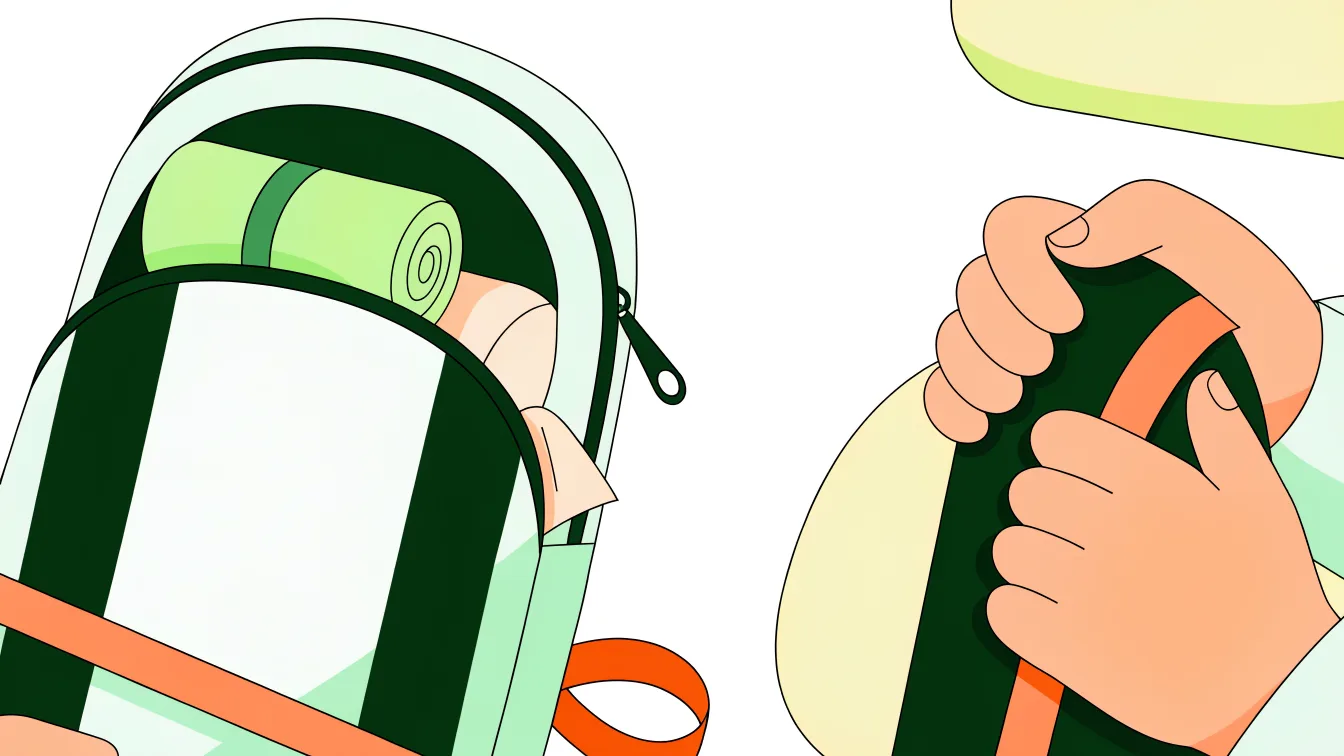
ULA lists the UltraGrid CDT at 27.1 oz, with 50L total volume and a removable foam backpanel. It recommends a base weight below 12 lb and total weight below 25 lb. Price tier: $$$.
Consider it if you already know your kit's weight and want a frameless pack whose removable parts take it from 27.1 oz down to a 15.3 oz stripped weight. Check ULA's page for the torso and belt sizing it offers before ordering.
Watch out for: The main body is listed as 25L. The other 25 liters sit outside the main body, so compare packing arrangements rather than model volume alone. The lower stripped weight also removes components; it is not a like-for-like alternative to the complete pack.
Framed options worth keeping on the shortlist
Gossamer Gear Mariposa 60: retain a frame and belt
The medium Mariposa with a medium straight belt lists 34.2 oz total weight. Gossamer Gear specifies a closed-shape aluminum frame, pivoting hipbelt, 30 lb comfort guidance, and 35 lb maximum. Price tier: $$$$.
Consider it when your departure load runs 25 to 30 lb and you use outside pockets: 24 of its 60 liters are exterior. The complete configured weight is the useful comparison with the frameless choices, not the body-only figure.
Watch out for: Its 60L total divides into 36L main-body capacity and 24L across exterior pockets. Other belt combinations change weight; without a belt, the medium lists 20.8 oz.
Osprey Exos 58: a heavier framed comparison
The Exos S/M lists 58L, 2.91 lb empty weight, and a 30–35 lb load range. Its AirSpeed suspension uses a LightWire frame and adjustable torso system. Price tier: Not shown.
Pick it when your departure load runs past 30 lb, above every comfort figure in the other picks.
Watch out for: at 2.91 lb (about 46.6 oz) it weighs more than twice the Kumo's 20 oz.
Who should keep a more supportive pack?
Keep looking beyond frameless options if your departure load exceeds their published guidance. This can happen with a longer food carry or equipment needed for colder conditions. Removing the frame does not make the equipment itself lighter or easier to accommodate.
Wait if you do not yet know your kit. Borrowing or trying a suitable pack can help you establish volume and fit before buying a specialist design.
Do not remove necessary equipment to make a preferred bag work. The National Park Service's Ten Essentials provide a planning foundation, with additions based on your route and activity. A pack should accommodate that plan rather than dictate an inadequate one.
If your requirements point toward a broader load allowance, compare backpacking packs for multi-day trips.
Which one should you buy?
Among the best ultralight backpacks here, choose by departure load:
- Under 20 lb and a small kit: Gossamer Gear Kumo 36.
- Under 25 lb with a fixed belt and 42L: Gossamer Gear G4-20.
- Under 25 lb with a base weight under 12 lb, and you want removable parts: ULA UltraGrid CDT.
- Up to 30 lb with a frame: Gossamer Gear Mariposa 60.
- 30–35 lb: Osprey Exos 58.
Before paying, check that the chosen configuration is available and that the seller's return conditions permit your intended fitting check.
Do not discard useful support merely to make a spreadsheet total look more impressive.

FAQ
Does ultralight always mean frameless?
No. This shortlist includes both framed and frameless packs because low weight can be achieved through different designs. Compare the complete configuration and published carrying guidance. A frame can still earn its weight with a light kit.
Can a foam pad replace a pack frame?
A pad can provide padding or structure where the maker specifies that use, but do not assume it creates the same carrying system. Follow the particular pack's instructions and load guidance. Adding padding does not justify increasing its stated capacity or recommended maximum load.
Is base weight enough to choose a pack?
No. Base weight leaves out consumables such as food and water, which still form part of the carried load. Compare your heaviest planned departure setup with the maker's guidance. Include externally attached items and accessories rather than counting only what fits inside the main compartment.
Should I remove every detachable part?
No. Decide which components you need before removing them. The lightest listed configuration may omit support, storage, or adjustment features you use.
Compare complete usable setups and follow the maker's instructions. A lower empty weight is only helpful if the resulting pack still suits the trip.